Overview
The CST Survey 57-ALHPKG Self-Leveling Rotary Laser Package represents a professional-grade solution for contractors, site preparation specialists, excavation companies, and landscaping professionals who demand precision over long distances. This comprehensive exterior laser system is designed for users who need to establish accurate level and grade references across large work areas, from residential foundations to commercial site development projects spanning hundreds of feet.
Contractors purchase the CST Survey 57-ALHPKG because it delivers survey-grade accuracy at a contractor-friendly price point. The electronic self-leveling technology eliminates the frustration and time waste associated with manual leveling, while the 2800-foot working diameter with the included LD440 detector ensures you can cover entire job sites from a single setup position. General contractors rely on this laser for foundation work, concrete crews use it for flatwork elevations, excavation operators depend on it for grade control, and landscapers trust it for drainage and hardscape installations.
What sets this package apart is its completeness—unlike purchasing components separately, the 57-ALHPKG arrives with everything needed for immediate productivity: the rotary laser, detector with bracket, tripod, grade rod, batteries, and protective case. This turnkey approach means your crew can start working the same day the package arrives, without compatibility concerns or additional shopping trips. The IP67 weather resistance rating provides confidence that your investment will withstand the harsh realities of outdoor construction environments, operating reliably through dust storms, rain showers, and the inevitable bumps and drops that occur on active job sites.
Key Specifications
- Model: CST Survey 57-ALHPKG Self-Leveling Rotary Laser
- Rotation Speed: 600 RPM for high visibility
- Working Range: 2800-foot diameter (1400-foot radius) with LD440 detector
- Leveling System: Electronic self-leveling with cross-axis capability
- Slope Capability: Single slope ±10% for drainage and grading applications
- Accuracy: Professional-grade precision for construction applications
- Weather Resistance: IP67 rated (dust-tight and water immersion protected)
- Anti-Drift System: Automatic monitoring alerts when laser is disturbed
- Power Source: (4) D-cell batteries for extended runtime
- Laser Type: Exterior-rated rotary laser suitable for outdoor use
- Operating Temperature: Wide range for year-round construction use
- Mounting: Standard 5/8-11 thread for tripod compatibility
What's in the Kit
The CST Survey 57-ALHPKG arrives as a complete, ready-to-work package with all essential components included:
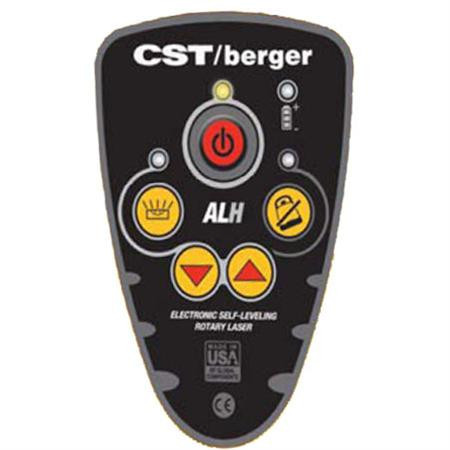
- CST Survey 57-ALHPKG Rotary Laser Unit: The main self-leveling laser with electronic controls and weather-sealed housing
- LD440 Laser Detector: Professional receiver that extends working range to 2800 feet diameter in bright conditions
- Detector Mounting Bracket: Secure clamp for attaching the LD440 to the grade rod
- Heavy-Duty Tripod: Stable platform with adjustable legs and center column for positioning the laser at optimal height
- Grade Rod: Telescoping detector rod with clear measurement markings for elevation readings
- Four D-Cell Batteries: Long-lasting power source for extended operation between battery changes
- Protective Carrying Case: Rugged case with custom foam inserts to protect all components during transport and storage
- Operating Manual: Comprehensive instructions covering setup, operation, and maintenance procedures
This complete kit approach eliminates the frustration of discovering you need additional accessories after delivery, ensuring your investment is immediately productive.
Job Applications
The CST Survey 57-ALHPKG excels across a diverse range of professional construction and site development applications:
Foundation and Footing Work: Establish precise elevation references for residential and commercial footings, ensuring forms are set at consistent heights around the entire perimeter. The laser's accuracy prevents costly foundation errors that compound through subsequent construction phases. Concrete crews use the rotating beam to set screed rails, verify form heights, and establish consistent depths for slab pours.
Site Grading and Excavation: Guide excavation equipment operators to precise cut and fill elevations across large sites. The 2800-foot range allows a single laser setup to control grading operations for entire building pads, parking lots, or subdivision phases. The LD440 detector mounted on excavator buckets or grade stakes provides instant feedback to operators, dramatically reducing over-excavation and the associated material and labor costs.
Drainage and Utility Installation: The single slope capability makes the 57-ALHPKG ideal for establishing consistent grades for drainage systems, sewer lines, and stormwater management installations. Set the laser to the required slope percentage and install pipes to the rotating plane, ensuring proper flow rates throughout the system. Landscapers and site contractors rely on this feature for French drains, surface drainage, and underground utility routing.
Commercial Flatwork and Paving: Control elevations for large concrete slabs, warehouse floors, and parking areas where dead-level or specified slopes are critical. The laser provides a consistent reference for screed operations, allowing finishers to achieve specified elevations across expansive pours. Paving contractors use the laser for base preparation and asphalt screed control on roadways and parking lots.
Landscaping and Hardscape Installation: Establish level references for retaining wall construction, patio installations, and large-scale landscape grading. The weather resistance allows operation in outdoor conditions while landscape crews shape terrain, install irrigation systems, and construct outdoor living spaces. The long range is particularly valuable for golf course construction, athletic field grading, and large residential landscape projects.
Agricultural and Land Development: Create consistent slopes for field drainage, pond construction, and irrigation systems on farms and rural properties. Land developers use the laser for rough grading operations, establishing building pads, and laying out infrastructure across large parcels prior to subdivision development.
Compatible Accessories
Expand the capabilities of your CST Survey 57-ALHPKG with these compatible accessories available from Express Tools:
- Replacement Laser Detector Batteries - Keep spare power sources on hand for uninterrupted operation
- Professional Heavy-Duty Laser Tripods - Additional tripods for multi-laser setups or quick relocation
- Telescoping Grade Rods - Extra rods for multiple crew members working simultaneously
- Laser Target Plates - Visual targets for precise alignment in interior or close-range applications
- Laser Safety Glasses - Eye protection for crew members working near laser beams
- Machine Mounting Brackets - Attach detectors to excavators, dozers, and grading equipment
- Detector Clamps and Holders - Secure mounting solutions for various rod and stake configurations
- Weatherproof Transport Cases - Additional protection for extreme conditions or equipment rental fleets
Related Guides
Maximize your productivity and accuracy with these helpful resources from the Express Tools knowledge center:
- Complete Rotary Laser Setup Guide - Step-by-step instructions for proper laser positioning and calibration
- How to Establish Slope with Rotary Lasers - Techniques for drainage, roads, and utility grade control
- Laser Detector Operation Fundamentals - Understanding detector displays and achieving maximum accuracy
- Excavation Grade Control Best Practices - Professional methods for machine guidance and cut/fill operations
- Laser Level Maintenance and Care - Extend equipment life and maintain accuracy with proper maintenance
Frequently Asked Questions
- What is the actual working range of the CST Survey 57-ALHPKG in real-world conditions?
- The laser has a working diameter of 2800 feet (1400-foot radius) when used with the included LD440 laser detector. In optimal conditions with the naked eye, the visible range is shorter, typically 300-400 feet depending on ambient light conditions. The detector is essential for extended range work, particularly in bright daylight when the laser beam becomes difficult to see visually. For most construction applications in full sun, plan on using the detector beyond 200 feet for reliable accuracy.
- How does the IP67 rating protect the laser, and what conditions can it withstand?
- The IP67 rating means the laser is completely dust-tight (the "6" rating) and protected against temporary water immersion up to one meter deep for 30 minutes (the "7" rating). In practical terms, this means the laser can operate in heavy rain, dusty conditions, and can survive accidental drops into puddles or mud. However, it's not designed for prolonged submersion or high-pressure water jets. The weather sealing protects internal electronics and the leveling mechanism from moisture and particulate contamination that would damage non-sealed units.
- Can I use this laser for interior work, or is it only for exterior applications?
- While the CST Survey 57-ALHPKG is optimized for exterior use with its high rotation speed and long range, it can certainly be used for interior applications. The 600 RPM rotation speed creates a bright, easily visible line on interior walls and surfaces. However, for dedicated interior work like drop ceiling installation or wall framing, an interior line laser might be more convenient. The 57-ALHPKG excels when you need both interior and exterior capability from a single tool, such as during commercial construction where you're working both inside and outside simultaneously.
- How often does the laser need to be calibrated, and can I do it myself?
- Professional-grade rotary lasers like the CST Survey 57-ALHPKG should be checked for accuracy periodically, typically every 6-12 months depending on usage intensity and site conditions. Many contractors perform basic accuracy checks themselves using standard surveying techniques, but factory calibration should be performed annually for tools used in critical applications. The electronic self-leveling system is designed to maintain accuracy under normal conditions, but impacts, extreme temperature changes, or extensive use can affect calibration over time. The user manual includes instructions for field accuracy verification.