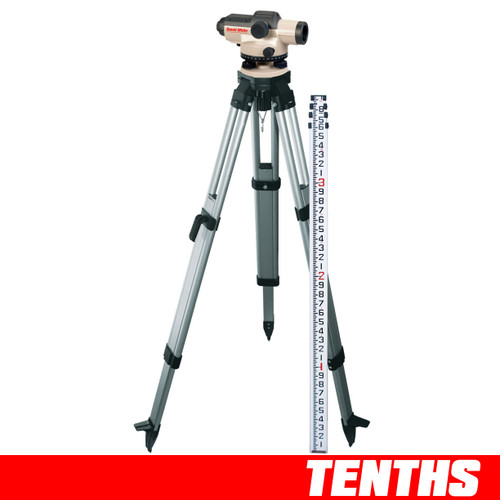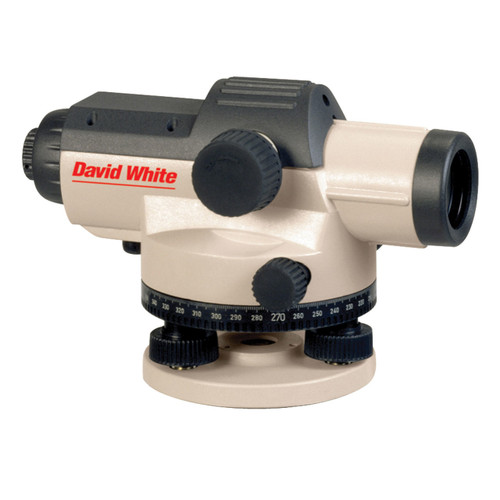
The LaserLine GR1000I is a 10-foot direct-reading grade rod engineered to eliminate on-the-fly elevation math on busy grading sites. By setting your benchmark elevation once on the moveable tape face, every subsequent rod reading delivers a true elevation — no addition, no subtraction, no transcription errors. For crews running high-volume cut-and-fill operations, drainage layout, or foundation pads, that time savings compounds quickly across a full workday.
Overview & Jobsite Applications
The GR1000I is built around a practical truth: the more calculations you remove from field workflow, the fewer errors reach the finished grade. Whether you are shooting elevations for a residential foundation, verifying sub-base depth on a commercial pad, or setting drainage inverts on a utility project, the direct-reading format keeps your rod person confident and your grade checker moving. The feet-and-inches graduation scale matches standard construction practice, so there is no unit conversion friction between the rod, the plan set, and the crew communicating over two-way radio.
Key Specifications
- Model: GR1000I
- Length: 10 feet
- Graduation: Feet and Inches
- Reading Format: Direct-reading (true elevation)
- Tape Face: Moveable — repositions to entered benchmark elevation
- Compatible With: Rotary laser levels, laser receivers, and optical levels
- Construction: Lightweight fiberglass composite sections
- Sections: Multi-section telescoping design for transport and storage
Key Features
- Moveable Tape Face: Slide the graduated tape to your known benchmark and lock it — every reading from that point is a direct true elevation, readable without calculation.
- Feet & Inches Graduations: Standard imperial markings familiar to framing, concrete, and civil crews; no metric conversion needed on typical U.S. job sites.
- High-Visibility Markings: Bold, high-contrast graduation printing ensures clean reads even in bright sunlight or at extended distances from the laser receiver.
- Durable Composite Construction: Fiberglass sections resist warping, moisture absorption, and the incidental impacts common on active grading sites.
- Compact When Collapsed: Telescoping sections break down to a manageable length for truck transport and tool box storage without sacrificing 10-foot working range.
- Receiver-Compatible Target Zone: Rod face accommodates standard laser detector clips and brackets for hands-free grade shooting with a rod person.
Job Applications
- Residential Foundation Layout: Set your benchmark at finished floor elevation once, then verify footing depths and pad elevations across the entire excavation without recalculating at each corner.
- Site Grading & Drainage: Confirm swale slopes, drainage invert elevations, and finished grade across large earthwork areas efficiently — the direct-read format keeps grade checkers moving at production pace.
- Utility & Pipeline Work: Read pipe invert depths and bedding elevations directly against your established datum, reducing the risk of grade errors that cause costly re-digs.
- Commercial Slab & Sub-Base Verification: Verify compacted sub-base and concrete pour elevations on commercial projects where tolerances are tight and inspection documentation matters.
Compatible Accessories
- Laser Detector / Receiver for Grade Rods
- Rod Clamp & Detector Bracket
- Grade Rod Carrying Case
- Rotary Laser Level — Compatible Models
- Tripod & Mounting Hardware for Rotary Lasers
Related Guides
- How to Use a Direct-Reading Grade Rod: Step-by-Step Setup Guide
- Choosing the Right Grade Rod for Your Laser Level
- Grade Control Best Practices for Earthwork Contractors
- Feet & Inches vs. Decimal Feet: Which Rod Graduation Is Right for Your Project?
Frequently Asked Questions
- What makes a direct-reading rod different from a standard grade rod?
- A standard grade rod reads distance from the base of the rod, requiring you to add or subtract from a benchmark elevation to get true elevation. A direct-reading rod like the GR1000I has a moveable tape face you set to your benchmark, so every reading is the actual elevation — no math required in the field.
- Can I use the GR1000I with any rotary laser level?
- Yes. The GR1000I works with virtually any rotary laser level and laser receiver combination. Simply mount your detector to the rod, set the tape face to your benchmark elevation, and read true elevations as the detector locks onto the laser plane.
- What graduation increments does the GR1000I use?
- The GR1000I is graduated in feet and inches, making it the natural choice for construction crews working from plan sets and specifications dimensioned in standard imperial units. It is not a decimal-foot rod.
- Is the GR1000I suitable for use in wet or muddy conditions?
- The fiberglass composite construction is resistant to moisture and will not warp or swell the way wood rods can. While the rod is built for active jobsite use, rinsing mud from the tape face after use will preserve graduation legibility and extend service life.
Frequently Asked Questions
What makes a direct-reading rod different from a standard grade rod?
A standard grade rod reads distance from the base of the rod, requiring you to add or subtract from a benchmark elevation to get true elevation. A direct-reading rod like the GR1000I has a moveable tape face you set to your benchmark, so every reading is the actual elevation — no math required in the field.
Can I use the GR1000I with any rotary laser level?
Yes. The GR1000I works with virtually any rotary laser level and laser receiver combination. Simply mount your detector to the rod, set the tape face to your benchmark elevation, and read true elevations as the detector locks onto the laser plane.
What graduation increments does the GR1000I use?
The GR1000I is graduated in feet and inches, making it the natural choice for construction crews working from plan sets and specifications dimensioned in standard imperial units. It is not a decimal-foot rod.
Is the GR1000I suitable for use in wet or muddy conditions?
The fiberglass composite construction is resistant to moisture and will not warp or swell the way wood rods can. While the rod is built for active jobsite use, rinsing mud from the tape face after use will preserve graduation legibility and extend service life.