Overview
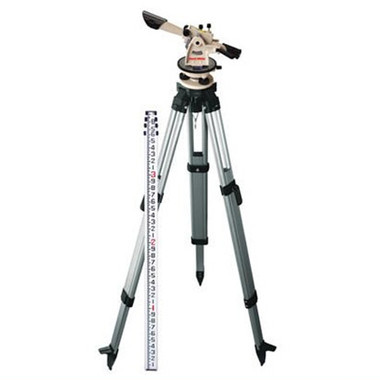
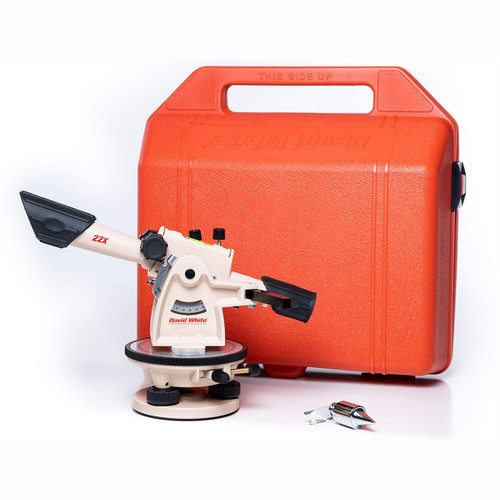
The David White AL8-26 Automatic Level (Model 45-8926) is a professional-grade optical instrument engineered for demanding construction and site work where speed, durability, and consistent accuracy matter most. Featuring 26x magnification power and a wire-hung, magnetically damped compensator, this automatic level delivers precise horizontal reference lines across foundation pours, grade staking, and drainage installations without the constant releveling required by manual instruments. The AL8-26's rugged die-cast aluminum housing withstands the bumps, vibrations, and weather exposure typical of active production sites, while its four-screw leveling base and circular bubble vial enable quick, stable setup on uneven ground. With a minimum focusing distance of just 12 inches and a 360-degree horizontal circle graduated in single degrees, the AL8-26 gives layout crews the versatility to handle close-range detail work and long-distance elevation checks from a single instrument station. Express Tools offers this proven workhorse at $216.11—a value-driven solution for contractors, civil crews, and site supervisors who need reliable elevation control without the premium cost of digital systems.
Key Specifications
- Magnification: 26x optical power for clear rod readings at extended distances
- Accuracy: ±1/16 inch per 100 feet of sight (±1.5mm at 30m) under standard conditions
- Compensator Type: Wire-hung, magnetically damped automatic compensator with ±15 arc-minute working range
- Objective Lens Diameter: 36mm effective aperture for brightness in low-light conditions
- Minimum Focus Distance: 12 inches (0.3m) for close-quarters layout and formwork checks
- Horizontal Circle: 360-degree scale with 1-degree graduations for angle measurement and reference
- Leveling Base: Four-screw system with 40 arc-minute leveling range and brass friction drives
- Telescope Length: Approximately 8.1 inches (206mm)
- Instrument Weight: 3.75 lbs (1.7 kg) including optics and base assembly
- Operating Temperature: -4°F to +122°F (-20°C to +50°C)
- Tripod Thread: Standard 5/8 x 11 TPI for universal mounting compatibility
- Weather Resistance: Sealed optical chamber with desiccant protection against humidity and dust
What's in the Kit
- David White AL8-26 Automatic Level with integrated compensator and 26x telescope
- Padded hard-shell carrying case with custom foam cutouts and reinforced latches
- Adjustment tools including hex keys for compensator calibration and reticle focus
- Lens covers (front objective and eyepiece) to protect optics during transport and storage
- Plumb bob for precise instrument centering over control points
- Printed operator's manual with setup instructions, maintenance guidelines, and troubleshooting tips
- Manufacturer warranty documentation and registration card
Job Applications
- Foundation and Flatwork Grades: Establish consistent elevations across footing excavations, slab pours, and concrete pads where level references must remain accurate despite vibration from machinery and foot traffic. The magnetic damping stabilizes the line of sight quickly after each setup disturbance, keeping production moving.
- Site Drainage and Utility Slopes: Verify fall angles for storm sewer lines, sanitary mains, and surface grading by combining elevation shots with the horizontal circle's degree markings. The AL8-26's accuracy specification ensures drainage systems meet engineered slopes without costly rework or standing water issues.
- Benchmark Transfers and Control Networks: Extend vertical control from survey monuments to working benchmarks across large sites, maintaining the ±1/16-inch per 100-foot tolerance required for multi-phase construction coordination and as-built documentation.
- Formwork and Screeding Operations: Set grade stakes, concrete screed rails, and formwork heights with confidence, using the 12-inch minimum focus to check form elevations at arm's length and the 26x power to read leveling rods at distances up to 300 feet.
- Rough Grading and Earthwork: Guide dozer and scraper operators during mass excavation and fill placement, providing real-time elevation feedback that prevents overcuts and undercuts requiring expensive fill hauling or cut extensions.
- Paving and Surface Preparation: Support asphalt and concrete paving crews by maintaining grade control points along centerlines and edges, ensuring finished surfaces meet flatness specifications and drainage designs for parking lots, roadways, and industrial floors.
Compatible Accessories
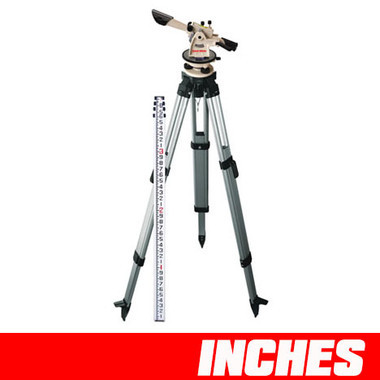
- Aluminum Tripod with Extension Legs: Flat-head or dome-head models with adjustable height ranges from 40 to 66 inches for varied terrain and operator comfort
- Lenker Grade Rods (fiberglass or aluminum): 13-foot, 16-foot, and 25-foot telescoping or sectional rods with metric or engineer's scale graduations for precision leveling shots
- Optical Plummet Tribrach: Upgrade accessory for precise instrument centering over benchmark disks and control stations
- Laser Detector/Receiver: Attach a rotating laser receiver to the AL8-26 rod for machine control and one-person layout tasks in bright sunlight
- Sunshade Extension Hood: Slip-on shade tube to reduce glare and heat shimmer when sighting across hot asphalt or reflective surfaces
- Replacement Compensator Components: Factory-service kits including suspension wires, damping magnets, and prism assemblies for long-term maintenance
- Field Book and Data Forms: Standard leveling field books and grade sheet templates for organized record-keeping and third-party verification
Related Guides
- How to Set Up and Calibrate an Automatic Level for Accurate Site Work
- Reading Leveling Rods: Engineer's Scale, Metric, and Direct Elevation Methods
- Differential Leveling Techniques for Transferring Benchmarks Across Construction Sites
- Optical Level Maintenance: Cleaning, Storage, and Field Calibration Checks
FAQ
- What is the effective range of the David White AL8-26 for accurate rod readings?
- Under typical jobsite conditions with good visibility, the AL8-26 maintains its ±1/16-inch per 100-foot accuracy specification for sighting distances up to approximately 300 feet. For optimal precision and clear reticle readings, most operators limit shots to 200-250 feet and balance foresight/backsight distances to minimize atmospheric refraction errors. In hazy or heat-shimmer conditions, reducing shot lengths to 150 feet or less helps preserve accuracy.
- How do I know if the compensator is functioning properly before starting the day's work?
- After leveling the instrument using the circular bubble and four leveling screws, gently tap the telescope housing while observing a stationary target through the eyepiece. The crosshairs should momentarily drift then settle back to the same position within one to two seconds. If the crosshairs return to a different elevation or oscillate continuously, the compensator may require service. Perform this "tap test" at the start of each workday and after any significant instrument impacts or transportation.
- Can the AL8-26 be used for vertical angle measurements or layout?
- No—the AL8-26 is an automatic level designed exclusively for establishing horizontal planes and measuring elevation differences. The compensator mechanically locks the line of sight to a level (horizontal) orientation, and the telescope cannot tilt for vertical angle shots. For angle measurements, slope staking, or vertical layout work, consider a builder's transit, theodolite, or total station instrument that includes a vertical circle and angle-measuring capability.
- What maintenance does the AL8-26 require to keep it field-ready?
- After each use, brush debris from the leveling base and wipe the exterior with a dry cloth, then store the instrument in its case with lens covers in place. Clean objective and eyepiece lenses only with optical-grade lens tissue and cleaning solution—never use abrasive materials or solvents. Check and tighten the four leveling screws monthly to prevent backlash, and have the compensator calibration verified annually by a qualified service center or if the instrument experiences a hard drop or impact. Store the case in a climate-controlled environment when possible to prevent internal condensation and lubricant degradation.