Complete 28x Auto Level Kit for Decimal-Foot Surveying Workflows
The Spectra Precision AL28M-1 delivers everything a surveyor, civil engineer, or grade contractor needs to run accurate elevation shots right out of the box. Pairing the battle-tested AL28M 28-power automatic level with a decimal-foot tenths rod and a heavy-duty aluminum tripod, this kit eliminates the guesswork of sourcing compatible accessories and gets your crew on the gun faster. Whether you're setting benchmarks on a large civil site or verifying finish grades for a concrete pour, the AL28M-1 is built to perform shift after shift.
Instrument Overview & Jobsite Applications
The AL28M optical level uses a compensator-based self-leveling system with magnetic dampening that settles the line of sight quickly after setup — critical when you're moving the instrument frequently across a job. The 28x magnification gives you sharp, clear target readings at distances where lesser instruments blur out, and the wide field of view keeps rod readings efficient even with a less experienced rod person. This level handles grade checks, benchmark transfers, floor flatness surveys, utility installation, and site drainage layout with equal confidence.
Key Specifications
- Magnification: 28x
- Accuracy: 1/16 inch (1.5mm) per 100 feet
- Compensator Type: Automatic with magnetic dampening
- Compensator Range: ±15 arcminutes
- Objective Lens Diameter: 36mm
- Minimum Focus Distance: 3 feet (0.9m)
- Field of View at 100m: 1°30' (2.6m)
- Stadia Ratio: 100:1
- Rod Included: Tenths-graduated (decimal-foot) measuring rod
- Tripod Included: Aluminum flat-head tripod
What's in the Kit
- Spectra Precision AL28M 28x automatic optical level
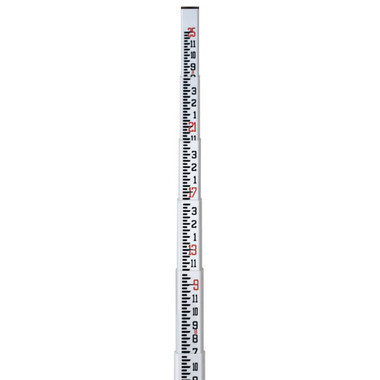
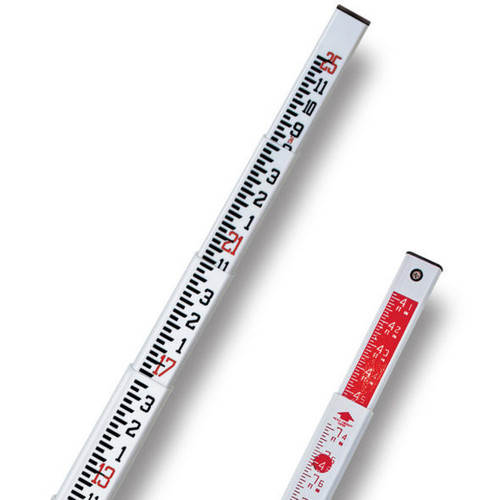
- Decimal-foot (tenths-graduated) fiberglass measuring rod
- Aluminum flat-head tripod with adjustable legs
- Lens cloth and dust cap
- Carrying case for the instrument
- Operator's manual and warranty documentation
Job Applications
Site Grading & Earthwork: Use the AL28M-1 to establish and verify cut/fill elevations across grading operations. The tenths rod pairs naturally with machine control grade stakes and civil plan sheets dimensioned in decimal feet.
Concrete & Foundation Layout: Check form heights, verify slab elevations, and confirm footing depths before the pour. The 1/16" accuracy keeps you well within tolerance for structural flatwork.
Utility & Pipeline Installation: Maintain consistent pipe grades for gravity sewer, storm drain, and irrigation systems by shooting rod elevations at each joint or station interval.
Benchmark Transfer & Topographic Survey: Run level loops between established benchmarks or set temporary benchmarks for construction control using the stadia function for quick distance checks.
Compatible Accessories
- Spectra Precision CR600 Fiberglass Level Rod (tenths)
- Aluminum Flat-Head Tripod (replacement)
- Instrument Carrying Case for AL-Series Levels
- Plumb Bob & Flagging Kit for Grade Staking
- Sunshade / Rain Hood for AL28M Objective Lens
Related Guides
- How to Set Up and Use an Automatic Optical Level
- Decimal Feet vs. Feet-Inches: Which Rod Do You Need?
- Auto Level vs. Laser Level: Choosing the Right Tool for Your Job
- Reading a Tenths Rod: A Field Guide for Contractors
Frequently Asked Questions
- What does the "M-1" in AL28M-1 mean?
- The "M" indicates the instrument is optimized for metric and decimal-foot workflows, and the "-1" suffix designates this as a complete kit that includes the tenths-graduated measuring rod and aluminum tripod — not just the bare instrument.
- Is the AL28M-1 accurate enough for concrete slab work?
- Yes. The AL28M delivers 1/16-inch accuracy per 100 feet, which meets or exceeds the tolerance requirements for most commercial and residential concrete flatwork, form setting, and finish grade verification.
- Can I use a standard feet-and-inches rod with the AL28M?
- The AL28M optical level itself is compatible with any standard level rod. However, the kit includes a tenths (decimal-foot) rod specifically. If your workflow uses feet-inches rods, Express Tools also carries those rods separately.
- Does the AL28M require batteries or calibration before use?
- No batteries are required — the AL28M is a purely optical instrument. The self-leveling compensator is mechanical with magnetic dampening. It's recommended to perform a two-peg test before starting any critical survey to verify collimation accuracy.