The LaserLine GR1000 is a professional-grade, direct-reading grade rod engineered to eliminate computational errors and dramatically speed up grade shots on busy job sites. Where conventional rods force crews to add or subtract a height-of-instrument offset to get a true elevation, the GR1000 displays actual ground elevations the moment a laser receiver locks on — saving time, reducing costly mistakes, and keeping production moving during foundation layout, concrete flatwork, and mass-grading operations.
Overview & Jobsite Applications
Designed for contractors who bill by the hour and get paid by the yard, the GR1000 works seamlessly with rotating laser levels and laser receivers. Once the instrument height is dialed in, every reading on the rod face is a true elevation in feet, tenths, and hundredths. Cut and fill values are immediately visible, so operators at the machine and grade checkers on the ground share the same numbers without radio confusion or re-calculation. The 10-foot overall length handles the full range of standard earthwork, paving, and structural depth requirements encountered on typical commercial and residential projects.
Key Specifications
- Overall Length: 10 feet
- Graduation Increments: Feet, tenths, and hundredths (0.01 ft)
- Reading Mode: Direct true-elevation (no HI math required)
- Display: High-contrast cut/fill face with clearly numbered elevation bands
- Material: Lightweight, impact-resistant fiberglass composite sections
- Rod Style: Telescoping / slip-joint extension sections
- Compatibility: Works with all standard rotating laser levels and laser receivers
- Minimum Reading Height: Suitable for finish grade shots at slab level
Key Features
- Direct Elevation Readout — Rod face shows actual elevations, eliminating the height-of-instrument subtraction step that causes field math errors
- Cut & Fill Indicators — Color-coded or clearly marked face lets operators instantly identify how much material to add or remove
- Feet, Tenths & Hundredths Graduations — Matches standard surveying and construction tolerances; no unit conversion needed
- 10-Foot Range — Covers deep utility cuts, foundation walls, rough grading, and finish paving in a single rod
- Durable Fiberglass Construction — Resists jobsite abuse, moisture, and UV exposure far better than painted wood rods
- Lightweight Design — Easy for one crew member to carry, set, and read throughout the shift
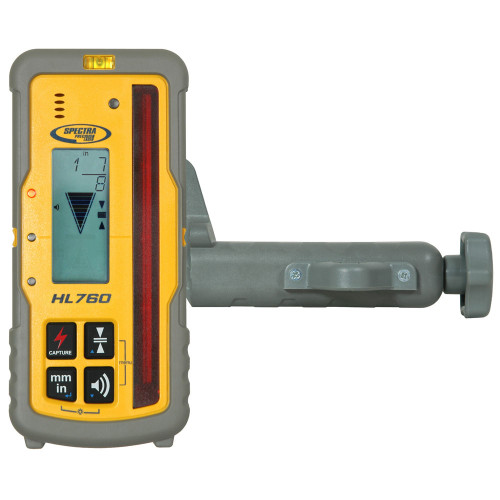
- Universal Receiver Slot — Standard receiver bracket slot accommodates most popular laser receiver models
Job Applications
Foundation & Footing Layout: Set your laser, dial in the benchmark elevation on the GR1000, and every footing shot reads as a true elevation. Inspectors and foremen verify depths without converting numbers — critical when tolerances are tight and concrete trucks are waiting.
Mass Grading & Earthwork: Grade checkers working behind scrapers and motor graders can call cuts and fills directly off the rod face to the operator. No calculator, no radio math — just a clean elevation number that matches the plan set.
Concrete Flatwork & Paving: Screeding and form-setting crews use the GR1000 to confirm finish elevations match design grade, catching high or low spots before the pour rather than after the fact.
Utility & Drainage Installation: Pipe layers verify invert elevations and slope compliance rod shot by rod shot. The hundredths graduation keeps drainage grades accurate enough to satisfy inspection without pulling a level loop.
Compatible Accessories
- Laser Receivers — Compatible Detector Models
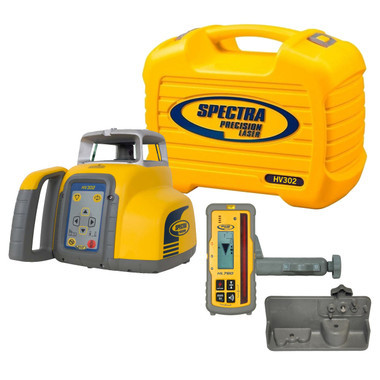
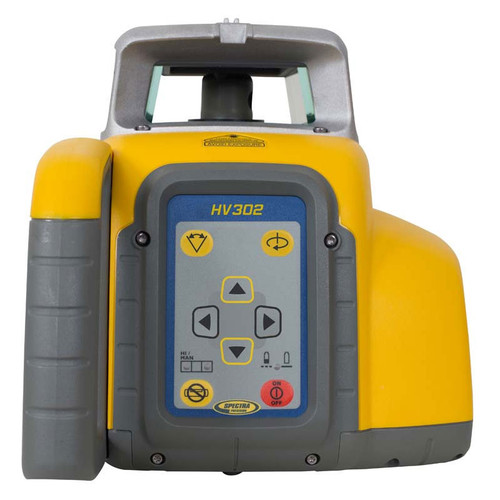
- Rotating Laser Levels for Grade Work
- Grade Rod Carrying Cases & Bags
- Replacement Rod Sections & Hardware
- Laser Level Tripods & Grade Poles
Related Guides
- How to Set Up a Direct-Reading Grade Rod on Site
- Choosing the Right Grade Rod for Your Laser Level
- Cut & Fill Basics: Reading a Grade Rod Without a Calculator
- Rotating Laser Levels vs. Transit Levels for Grading
Frequently Asked Questions
- What makes the GR1000 a "direct-reading" rod?
- A conventional grade rod requires you to subtract the height of your instrument from each reading to find the true ground elevation. The GR1000 is set to the benchmark elevation before you start shooting, so every reading on the rod face already reflects the actual elevation at that point — no subtraction needed in the field.
- Which laser receivers are compatible with the GR1000?
- The GR1000 features a standard receiver bracket slot that fits most popular rotating-laser receivers on the market. For confirmed compatibility with your specific detector brand and model, contact our team at Express Tools before ordering.
- Can the GR1000 be used with a builder's level or optical transit?
- Yes. While it is optimized for use with rotating laser systems, the high-contrast graduated face is fully readable through an optical level or transit. You would apply the same direct-reading setup procedure using the rod's elevation offset adjustment.
- Is the 10-foot length adequate for deep utility or foundation work?
- For most residential and light commercial applications — including footings, slabs, paving, and standard utility trenches — 10 feet is sufficient. For deeper excavations or retaining wall work exceeding 10 feet of vertical range, contact Express Tools to discuss extended rod options or stacking solutions.
Frequently Asked Questions
What makes the GR1000 a direct-reading grade rod?
A conventional grade rod requires you to subtract the height of your instrument from each reading to find the true ground elevation. The GR1000 is set to the benchmark elevation before you start shooting, so every reading on the rod face already reflects the actual elevation at that point — no subtraction needed in the field.
Which laser receivers are compatible with the GR1000?
The GR1000 features a standard receiver bracket slot that fits most popular rotating-laser receivers on the market. For confirmed compatibility with your specific detector brand and model, contact our team at Express Tools before ordering.
Can the GR1000 be used with a builder's level or optical transit?
Yes. While it is optimized for use with rotating laser systems, the high-contrast graduated face is fully readable through an optical level or transit. You would apply the same direct-reading setup procedure using the rod's elevation offset adjustment.
Is the 10-foot length adequate for deep utility or foundation work?
For most residential and light commercial applications — including footings, slabs, paving, and standard utility trenches — 10 feet is sufficient. For deeper excavations or retaining wall work exceeding 10 feet of vertical range, contact Express Tools to discuss extended rod options or stacking solutions.