Overview
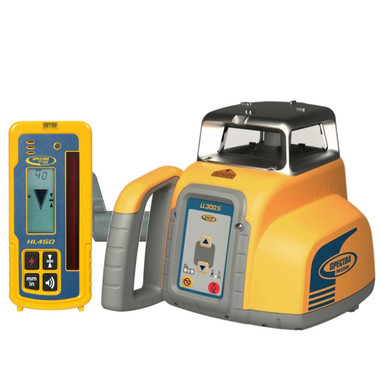
The Spectra Precision LL300S Laser Level Package delivers dependable rotary laser performance for contractors who need reliable grade control without the ongoing expense of rechargeable battery systems. This complete kit pairs the LL300S laser transmitter with the HL450 digital receiver, creating a dual-grade solution for site work, concrete pours, and excavation projects. General contractors, landscape crews, and utility installers rely on this configuration for establishing horizontal reference planes across distances up to 1,300 feet diameter. The alkaline battery configuration eliminates charging downtime and simplifies fleet management—your crew grabs fresh batteries and gets to work. With ±1/8-inch accuracy at 100 feet and durable IP67 environmental protection, the LL300S provides the precision and weather resistance professional applications demand at a price point that makes sense for growing operations.
Key Specifications
- Accuracy: ±1/8 inch at 100 feet (±3 mm at 30 m)
- Working Diameter: 1,300 feet (400 m) with HL450 receiver
- Laser Type: Red beam, Class 2 (safe for open work areas)
- Rotation Speed: 600 RPM standard
- Self-Leveling Range: ±5 degrees (audible out-of-level alert)
- Environmental Rating: IP67 (dust-tight, water submersion to 1 meter)
- Operating Temperature: -4°F to 122°F (-20°C to 50°C)
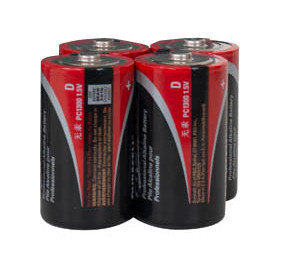
- Power Source: 4 D-cell alkaline batteries (transmitter), 2 AA batteries (receiver)
- Battery Life: Approximately 100 hours continuous operation (alkaline)
- Receiver Type: HL450 digital LCD with dual-sided readout
- Receiver Accuracy: ±1/16 inch (±1.5 mm) digital readout
- Thread Mount: 5/8 x 11 tripod thread (industry standard)
- Weight: 5.7 lbs (2.6 kg) transmitter only
- Warranty: 3-year manufacturer limited warranty
What's in the Kit
- LL300S Laser Transmitter with red beam rotary head
- HL450 Digital Laser Receiver with dual-sided LCD display
- RC402N Remote Control for transmitter operation
- Alkaline Battery Set (4 D-cell for transmitter, 2 AA for receiver)
- Hard Shell Carrying Case with custom foam insert
- Target Card for short-range visual alignment
- Operator Manual and quick start guide
- Calibration Certificate documenting factory accuracy verification
Job Applications
- Concrete Slab Pours: Establish screeding elevation across large deck pours, basement floors, and parking structures where maintaining consistent thickness controls material costs and meets structural specifications.
- Site Excavation and Grading: Set grade stakes and guide skid steer operators during cut-and-fill operations, ensuring proper drainage slopes and eliminating expensive re-work from incorrect elevations.
- Landscape Installation: Control patio grades, establish drainage swales, and set retaining wall elevations across residential and commercial properties where proper water management prevents callback issues.
- Utility Trenching: Maintain consistent fall for gravity-flow sewer and stormwater lines, meeting municipal grade requirements while minimizing unnecessary depth that increases excavation time and backfill volume.
- Footing and Foundation Layout: Verify level footing forms and establish grade beams at consistent elevation, catching errors before concrete placement when corrections are simple and inexpensive.
- Suspended Ceiling Grid Installation: Set ceiling height reference around interior perimeters and guide main runner installation, eliminating string lines and reducing layout time on commercial tenant improvements.
Compatible Accessories
Expand your LL300S system capability with these field-tested accessories:
- HR320 Machine Receiver — Grade control receiver for excavator and dozer mounting
- HL700 Rod Receiver — Enhanced handheld receiver with extended 2,600-foot range
- Heavy-Duty Elevating Tripod — Quick-crank height adjustment for fast setup on grade work
- 16-Foot Aluminum Grade Rod — Tenths-graduated rod for elevation measurements with HL450
- Universal Receiver Clamp — Secure HL450 to grade rods, posts, and excavator masts
- Alkaline D-Cell Batteries (12-Pack) — Keep backup power on the truck for uninterrupted operation
- Laser Enhancement Glasses — Improve red beam visibility in bright ambient conditions
Related Guides
- Complete Guide to Rotating Laser Setup for Site Work — Step-by-step process for accurate instrument positioning and verification
- Alkaline vs. Rechargeable Laser Levels: Total Cost Analysis — Compare operating costs, runtime requirements, and fleet management considerations
- Laser Receiver and Grade Rod Techniques for Accurate Elevation Measurement — Proper receiver mounting, reading techniques, and common error sources
- Troubleshooting Laser Level Accuracy Problems — Diagnostic procedures for verifying calibration and identifying environmental interference
Frequently Asked Questions
- What's the actual working range I can expect with the HL450 receiver on typical construction sites?
- The HL450 provides reliable detection to 650 feet radius (1,300 feet diameter) in normal job site conditions. Effective range decreases in direct sunlight—expect approximately 400-500 feet radius in bright conditions unless you use laser enhancement glasses. For comparison, this range handles most residential lots completely and covers substantial portions of commercial sites from a single setup position. If you routinely work sites larger than 10 acres or need maximum sunlight performance, consider upgrading to the HL700 receiver with extended range capability.
- Why choose alkaline batteries instead of a rechargeable system?
- Alkaline operation eliminates charging infrastructure and prevents dead-battery downtime when your rechargeable pack loses capacity mid-shift. For contractors running multiple crews or operating in remote locations without reliable charging access, alkaline batteries mean any crew member can swap fresh cells from standard inventory without specialized equipment. The trade-off is higher per-hour operating cost—approximately $0.15-0.20 per hour versus $0.03-0.05 for rechargeable systems. Calculate your actual usage: if you run the laser fewer than 500 hours annually, alkaline operation costs less when you factor in rechargeable battery replacement every 2-3 years.
- Can I use this laser for vertical layout work like wall plumbing or column alignment?
- No, the LL300S operates only in horizontal leveling mode. The transmitter self-levels its rotating laser head to create a level reference plane parallel to the ground. For vertical applications requiring plumb beam projection, you need either a dedicated plumb beam laser or a dual-grade rotary laser like the LL400 series that includes vertical axis operation. Many contractors pair a horizontal-only rotary like the LL300S with a separate cross-line laser for interior layout, achieving better overall capability than a single dual-axis unit at comparable total investment.
- How often does this laser need professional calibration?
- Spectra Precision recommends annual calibration verification for construction applications, or immediately after any drop, impact, or suspected accuracy problem. Most contractors performing standard site work and concrete placement find annual service intervals adequate. If you work to tight tolerances (±1/4 inch over long distances) or operate in demanding environments with frequent transport and vibration exposure, consider semi-annual calibration checks. The LL300S ships with a factory calibration certificate—establish a calibration schedule based on your accuracy requirements and document verification dates for quality control records and warranty compliance.