Overview
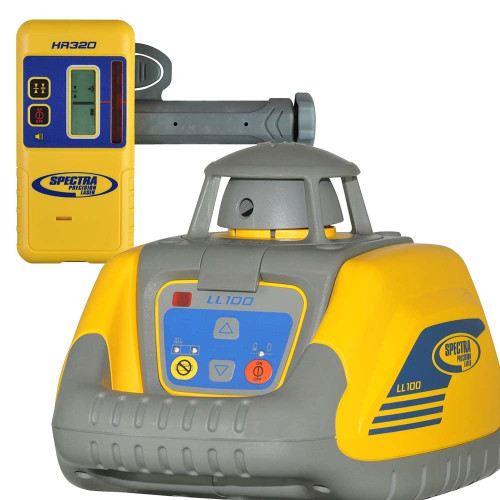
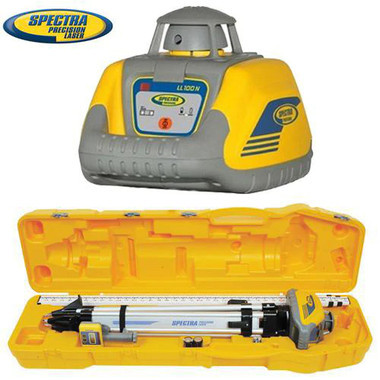
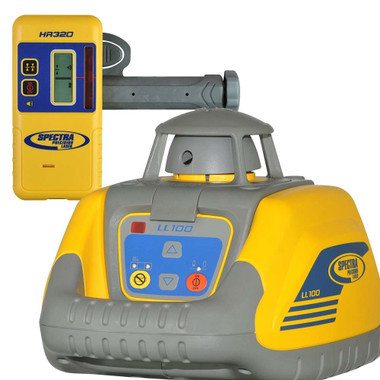
The Spectra Precision LL100N Laser BASE Package delivers dependable single-slope grading and elevation control for residential contractors, landscape professionals, and small excavation crews working on budget-conscious projects. This self-leveling rotary laser handles foundation layouts, drainage grading, deck installations, and basic site work where precision matters but premium features aren't justified. The BASE package includes everything needed for independent operation: the LL100N laser head with integrated slope capability, HR320 handheld receiver for machine-free detection, rugged carrying case, and batteries. Unlike entry-level models that sacrifice accuracy or durability, the LL100N maintains ±3/32" at 100 feet precision with manual slope adjustment in one axis—ideal for residential foundation pours, French drain installations, patio leveling, and retaining wall construction. Site crews choose this package when they need Spectra's proven reliability without rod-mounted receivers, tripods, or advanced dual-slope functionality that add cost to applications requiring straightforward elevation reference.
Key Specifications
- Accuracy: ±3/32" at 100 feet (±2.5mm at 30m)
- Working Diameter: 1,300 feet (400m) with HR320 receiver
- Self-Leveling Range: ±5 degrees automatic, audio/visual out-of-level alert
- Rotation Speed: 600 RPM standard (smooth beam detection)
- Slope Capability: Manual slope adjustment on single axis, 0-10% grade range
- Power Source: Rechargeable NiMH battery (included), 60+ hour runtime
- Environmental Rating: IP66 dust-tight and water-resistant for jobsite conditions
- Operating Temperature: -4°F to 122°F (-20°C to 50°C)
- Receiver Detection: HR320 handheld receiver with LCD and audio alert
- Warranty: 3-year manufacturer warranty on laser and receiver
What's in the Kit
- LL100N Laser Head: Self-leveling rotary laser with manual single-axis slope and integrated carrying handle
- HR320 Receiver: Handheld laser detector with LCD display, on-grade audio alert, and magnetic mounting
- Rechargeable Battery Pack: NiMH power cell with 60+ hour capacity for multi-day operation
- Battery Charger: AC adapter for overnight recharge cycles
- Hard-Shell Carrying Case: Molded protective case with custom foam inserts for transport and storage
- Quick Start Guide: Setup instructions and basic operation procedures
Job Applications
- Residential Foundation Layout: Set consistent elevation reference around footing perimeters and slab pours where ±3/32" accuracy meets residential building codes without requiring dual-slope functionality or grid leveling.
- Landscape Grading & Drainage: Establish proper slope for French drains, yard drainage, and surface water management using single-axis slope adjustment—the HR320 handheld receiver allows one-person operation without grade rods or tripod setups.
- Deck & Patio Installation: Level footings, beam placement, and finished surfaces for decks, patios, and outdoor structures where rotating laser provides continuous elevation reference superior to string lines or 4-foot levels.
- Concrete Flatwork: Control screed height for driveways, sidewalks, and garage slabs by mounting the HR320 on screed rails or checking elevation at formed edges throughout the pour.
- Retaining Wall Construction: Maintain consistent height across segmental block or timber walls using the laser as a non-contact reference line that won't interfere with materials or backfill operations.
- Excavation Depth Control: Monitor trench depth, basement digs, and pool excavations without dedicated machine-mount receivers—crew members use the handheld HR320 to verify depth at multiple points during digging operations.
Compatible Accessories
Heavy-Duty Elevating Tripods extend working height and improve visibility across uneven terrain. HL700 Rod Receiver Upgrade provides rod-mounted detection for elevation surveys and benchmark transfers. Universal Detector Clamps attach the HR320 to stakes, pipes, or form boards for hands-free monitoring. Laser Target Plates enhance beam visibility for indoor alignment tasks. RC402N Remote Control allows rotation speed adjustment and slope changes from receiver position.
Related Guides
Rotary Laser Setup & Self-Leveling Procedures explains calibration checks and out-of-level troubleshooting. LL100N vs LL300N Comparison clarifies when dual-slope and advanced features justify the upgrade. Single-Slope Grading with Manual Adjustment Lasers demonstrates drainage applications and slope-setting methods. Laser Receiver Detection Troubleshooting addresses range problems and interference solutions.
Frequently Asked Questions
- Can the LL100N create slope in two directions simultaneously?
- No, the BASE LL100N offers manual slope adjustment on a single axis only. For dual-axis slope capability required in complex drainage or building layouts, consider the LL300N or LL500 models with electronic dual-slope functionality. Single-axis slope handles the majority of residential grading, foundation work, and linear drainage applications.
- What's the working range difference between the laser head alone and with the HR320 receiver?
- The visible laser beam extends approximately 300 feet radius in bright conditions, while the HR320 receiver detects the beam up to 1,300 feet diameter (650-foot radius). Outdoor work and long-distance applications require the receiver—the unaided beam is only practical indoors or short-range tasks under 100 feet.
- Does this package include a tripod or grade rod?
- No, the BASE package contains only the laser head, HR320 handheld receiver, batteries, charger, and case. The laser operates from flat surfaces (tailgates, scaffolding, grade stakes), but a tripod is recommended for uneven terrain and improved working height. Grade rods require the separate HL700 rod receiver, not included in BASE configuration.
- How does the manual slope adjustment work on the LL100N?
- The laser head features a mechanical slope adjustment knob that tilts the rotating head on one axis, creating a sloped reference plane from 0-10% grade. You set the desired slope percentage using the calibrated dial, then rotate the entire laser body to align the slope direction with your project (typically aligned with drainage flow or building length). The laser self-levels perpendicular to the slope axis while maintaining your set grade in the adjusted direction.