Overview
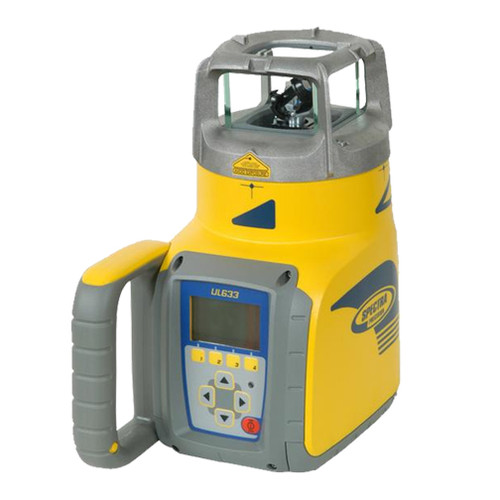
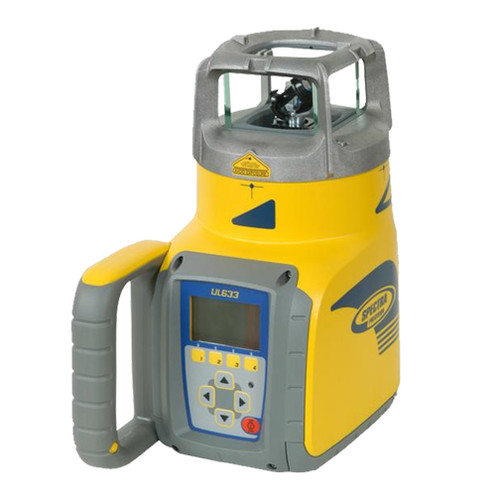
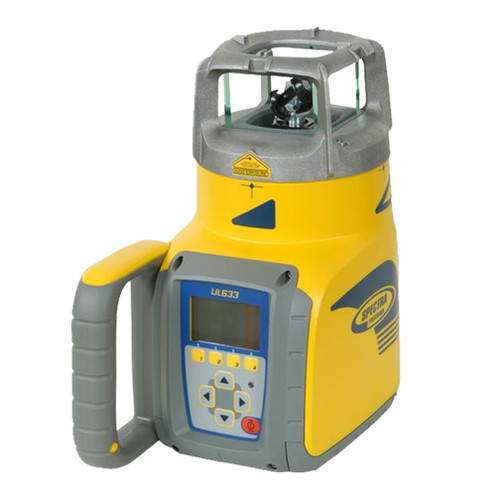
The Spectra Precision UL633N-1 Universal Laser delivers professional-grade leveling and alignment capabilities for contractors managing diverse project requirements. This complete package pairs Spectra's proven rotating laser platform with the advanced HL760 Laserometer receiver, providing extended detection range and precision beam tracking across horizontal, vertical, and dual-slope configurations. Built for demanding commercial construction, civil grading, and mixed-discipline applications, the UL633N-1 offers the versatility to transition seamlessly between site layout, formwork alignment, finish grading, and structural plumbing tasks without equipment changes. The HL760 receiver enhances usability with dual-sided digital LCD readouts, extended battery performance, and sensitivity adjustments that maintain accuracy in challenging ambient light conditions. Whether you're establishing grade on multi-acre sites, setting formwork elevations across long spans, or aligning structural elements on high-rise projects, this system provides the detection range, accuracy, and operational flexibility required for efficient, single-operator workflows.
Key Specifications
- Accuracy: ±1/16" at 100 feet (±1.5mm at 30m)
- Self-Leveling Range: ±5 degrees with automatic shutoff beyond range
- Rotation Speed: 0, 150, 300, 600, 900 RPM (5-speed selection)
- Working Diameter: Up to 3,300 feet (1,000m) with HL760 receiver
- Operating Modes: Horizontal, vertical, dual-slope (manual X/Y-axis)
- Receiver Detection Range: 1,000+ feet radius (300m) in standard conditions
- Receiver Accuracy: ±1/32" digital readout resolution
- Power Source: Rechargeable NiMH battery (laser); 2x AA batteries (receiver)
- Runtime: 30+ hours per charge (laser); 60+ hours (receiver)
- Environmental Rating: IP66 dust/water resistance
- Operating Temperature: -4°F to 122°F (-20°C to 50°C)
- Mounting Thread: 5/8"-11 standard tripod mount
What's in the Kit
- UL633N Universal Rotating Laser
- HL760 Laserometer Receiver with Rod Clamp
- Rechargeable NiMH Battery Pack
- Battery Charger with AC Adapter
- Hard-Shell Carrying Case
- Laser Safety Glasses
- Operating Instructions and Quick Reference Guide
Job Applications
- Site Grading and Excavation: The 3,300-foot working diameter and variable rotation speeds enable single-setup grade control across large earthwork sites. The HL760's extended detection range eliminates repositioning delays on expansive pads, parking structures, and civil infrastructure projects where maintaining continuous reference across 600+ foot spans significantly reduces staking labor and equipment moves.
- Concrete Formwork Elevation: Horizontal mode with precision ±1/16" accuracy establishes consistent formwork heights for foundation walls, elevated decks, and tilt-panel construction. The digital receiver readout provides real-time on-grade confirmation, allowing forming crews to set screeds and pour elevations without dedicated layout personnel—critical for fast-cycle commercial pours where formwork tolerance directly impacts structural integrity.
- Interior Layout and Drop Ceiling Installation: Vertical beam mode creates plumb reference planes for wall framing, elevator shaft alignment, and partition layout across multi-floor construction. The receiver's dual-sided display allows technicians working from either side of partitions to establish alignment simultaneously, accelerating layout on tenant improvement and office build-out projects where partition coordination requires frequent plumb verification.
- Structural Steel Alignment: Dual-slope capability with manual X/Y-axis adjustment enables multi-directional plane projection for beam seating, column plumbing, and precast panel alignment. The combination of ±5-degree self-leveling range and precise slope control makes the system valuable for structural ironwork where minor elevation changes across connection points require adjustable reference planes rather than fixed level lines.
- Finish Grading and Hardscape: Variable rotation speeds optimize visibility in different ambient light conditions—slower speeds for bright outdoor environments, faster speeds for indoor or shaded areas. This adaptability benefits finish grading contractors transitioning between landscape contouring, paver base preparation, and athletic field grading where detection consistency across varying sunlight exposure determines whether single-pass grading achieves specification tolerance.
- Utility and Pipeline Grade Control: Extended receiver range and sensitivity settings maintain detection in trench applications where depth and lateral offset create challenging beam interception angles. The HL760's adjustable sensitivity compensates for dust, vibration, and equipment interference common in underground utility installation, providing reliable grade reference for sewer, storm drain, and directional boring operations requiring continuous slope monitoring.
Compatible Accessories
Spectra HL700 Laserometer Receiver | Spectra RC602 Remote Control | Spectra LR60 Machine Receiver | 10ft Aluminum Grade Rod | Heavy-Duty Laser Tripod | Tribach Leveling Adapter | Magnetic Laser Target Plate
Related Guides
Rotating Laser Setup Best Practices for Large Sites | Spectra UL633 vs Topcon RL-H5A Comparison | Understanding Laser Receiver Detection Range | Troubleshooting Rotating Laser Accuracy Issues
Frequently Asked Questions
- What is the effective working range difference between the HL760 and previous generation receivers?
- The HL760 Laserometer extends detection range approximately 15-20% beyond earlier HL450/HL700 models under identical conditions, typically achieving 1,000+ feet radius in standard outdoor environments. This improvement results from enhanced photodiode sensitivity and signal processing algorithms that better discriminate laser pulses from ambient light interference. In practical terms, the HL760 maintains reliable detection at distances where previous receivers would require slower rotation speeds or optimal lighting—valuable when working near detection limits on large pads or when ambient conditions (bright sunlight, dust) reduce effective range.
- Can this laser be used for both interior and exterior applications on the same project day?
- Yes, the UL633N-1 is specifically designed for mixed-environment use. The five rotation speed settings (0-900 RPM) allow optimization for visibility and detection conditions—slower speeds (150-300 RPM) provide better visibility in bright outdoor conditions, while higher speeds (600-900 RPM) work well indoors or in shaded areas. The IP66 environmental rating protects against dust and water exposure during exterior use, while the compact form factor and standard 5/8"-11 mount facilitate quick transitions between tripod, wall mount, and floor setups for interior layout work.
- How does the dual-slope capability differ from automatic slope-matching systems?
- The UL633N's dual-slope function uses manual X and Y-axis adjustments rather than electronic grade matching, providing direct mechanical control over pitch and cross-slope angles. This approach offers precise, repeatable slope settings for applications like ramp construction, swale grading, and drainage planes where specific grade percentages must be maintained. While it requires initial setup with a grade rod or digital level to establish the desired plane, manual slope control eliminates electronic drift concerns and provides tactile confirmation of settings—preferred by many grading contractors for projects where grade verification and documentation are critical.
- What battery runtime should I expect during typical 10-hour workdays?
- The laser's rechargeable NiMH battery provides 30+ hours of continuous operation, easily supporting multi-day use between charges under normal rotation speed settings. The HL760 receiver runs 60+ hours on two AA batteries. In practice, most contractors experience 3-4 full workdays from the laser battery and one week or more from receiver batteries. Runtime decreases with continuous high-speed rotation (900 RPM) or extreme cold temperatures. Keeping a spare charged battery and spare AA cells ensures uninterrupted operation on time-critical pours or finish grading schedules where equipment downtime directly impacts production rates.