Overview
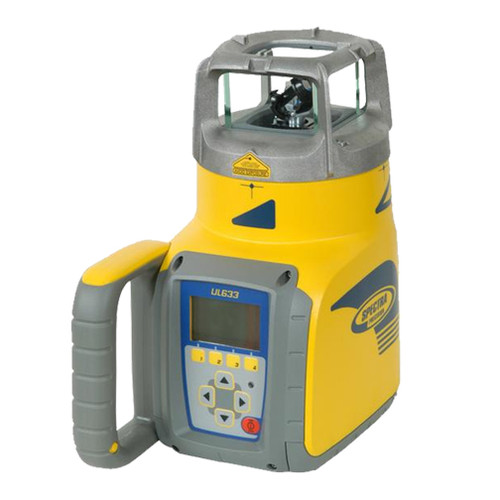
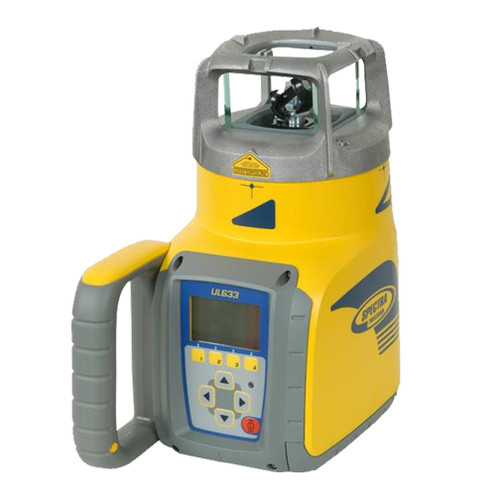
The Spectra Precision UL633N-14 delivers professional-grade accuracy across four operational modes—horizontal leveling, vertical plumb, 90-degree layout, and dual-grade slope—making it the go-to universal laser for contractors managing complex multi-discipline projects. This complete kit pairs the UL633N laser engine with the CR700 multi-use receiver and SF601 spot finder, providing ±1/16" accuracy at 100 feet and reliable detection out to 2,600 feet diameter. The motorized beam automatically levels in 15 seconds, while the CR700's multi-detection technology works seamlessly across horizontal sweeping, vertical plumb, and dual-slope configurations without receiver changes. Built for extreme jobsite conditions, the UL633N withstands 3-foot drops to concrete, operates in temperatures from -4°F to 122°F, and carries an IP66 rating against dust and water intrusion. The integrated SF601 spot finder simplifies overhead work by converting the beam into a visible reference point for ceiling grid, HVAC placement, and elevation transfer tasks where traditional receivers prove impractical.
Key Specifications
- Accuracy: ±1/16" at 100 feet (horizontal and vertical modes)
- Self-Leveling Range: ±5 degrees with audible out-of-level alert
- Working Diameter: 2,600 feet with CR700 receiver
- Rotational Speed: 0, 150, 300, 600, 1,500 RPM (variable)
- Beam Technology: Class 3R visible red diode, 635nm wavelength
- Operating Modes: Horizontal, vertical plumb, dual-grade slope, 90-degree layout
- Power: Rechargeable NiMH battery (40-hour runtime) or alkaline D-cells
- Environmental Rating: IP66 dust/water resistance, -4°F to 122°F operating range
- Drop Resistance: Survives 3-foot drops to concrete on all axes
- CR700 Receiver Range: 328-foot radius per side, 1/16" detection accuracy
- SF601 Detection Range: 100+ feet overhead spotting distance
- Mounting Thread: 5/8"-11 industry-standard for all tripods and poles
What's in the Kit
- UL633N Universal Laser with motorized leveling head
- CR700 Multi-Use Receiver with LCD and remote control functionality
- SF601 Spot Finder with magnetic mount and adjustable brightness
- RC703 Remote Control for 150-foot laser operation
- Rechargeable NiMH battery pack with AC charger
- Alkaline D-cell battery tray (backup power option)
- Hard-shell protective carrying case with custom foam inserts
- Ceiling/wall mounting bracket for indoor plumb work
- Laser safety glasses (red enhancement)
- Quick-start guide and calibration certificate
Job Applications
- Concrete Foundation Layout: The dual-grade slope mode establishes precise elevation control across large slab pours, while the 90-degree layout function creates perfect perpendicular reference lines for footing placement—eliminating string-line sag and reducing total station setups on multi-building developments where consistent grade tolerances prevent costly waterproofing failures.
- Steel Erection and Column Plumb: Vertical plumb mode projects a true-zenith beam that structural crews use for multi-story column alignment, maintaining ±1/16" accuracy across 100+ vertical feet where traditional plumb bobs drift in wind—the CR700 mounts directly to steel with magnetic backing for rapid checks without ladder repositioning.
- Commercial HVAC Rough-In: The SF601 spot finder converts the ceiling-projected beam into a visible reference point for ductwork hangers, diffuser locations, and equipment mounting precisely aligned with architectural plans—critical for mechanical coordination in tight plenum spaces where receiver rods can't physically reach and layout errors cascade through subsequent trades.
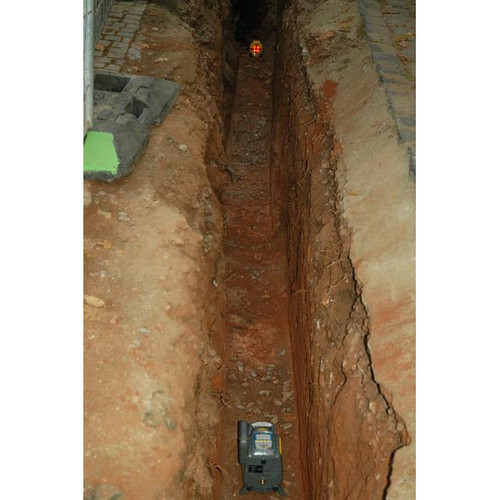
- Trench and Utility Grading: Single-axis slope capability (up to 10% grade) guides excavation crews on storm drainage, sanitary sewer, and underground utilities requiring specific fall rates—the CR700's rod-mounted configuration provides real-time cut/fill feedback to machine operators, reducing over-excavation and imported fill costs on linear earthwork.
- Interior Partition and Ceiling Grid: Horizontal sweeping mode establishes consistent elevation benchmarks for suspended acoustical ceilings, while vertical plumb transfers layout points from slab to deck—particularly valuable in multi-floor commercial retrofits where existing structure prevents direct measurement and the 2,600-foot range covers entire floor plates from single setups.
- Site Grading and Paving: The extended 1,300-foot working radius with CR700 allows grade crews to control finish elevations across parking lots, building pads, and athletic fields from centralized instrument positions—reducing setup time and maintaining consistent datum references that prevent elevation mismatches between paving phases.
Compatible Accessories
Spectra HL760 Laser Receiver | Spectra HR320 Handheld Receiver | Heavy-Duty Laser Tripod | Telescopic Grade Pole | Universal Receiver Rod Clamp | Replacement Alkaline Battery Tray | NiMH Battery Pack
Related Guides
Choosing Between Rotary Lasers and Multi-Line Lasers for Construction
Spectra UL633 vs. Topcon RL-H5A: Universal Laser Comparison
How to Set Up Laser Receivers for Grading and Excavation
Troubleshooting: Rotary Laser Won't Self-Level or Shows Error Codes
Frequently Asked Questions
- What's the practical difference between the CR700 receiver and standard laser detectors for this kit?
- The CR700 is a multi-mode receiver specifically engineered to detect the UL633N across all four operational configurations—horizontal rotation, vertical plumb, dual-slope, and 90-degree layout—without changing devices or recalibration. Standard single-mode receivers typically only work in horizontal leveling applications. The CR700 also includes remote control functionality, allowing you to adjust laser speed, activate slope mode, and shut down the unit from up to 150 feet away, which eliminates repeated walks back to the instrument during grade checking. For contractors running mixed applications (foundation one day, steel plumb the next), this versatility prevents the need to carry multiple receivers and reduces setup complexity on multi-discipline projects.
- Can I use this laser for machine control, or is it only for manual grade checking?
- The UL633N functions primarily as a manual reference system with receiver-based detection—it's designed for grade checkers, layout crews, and operators using receiver-equipped grade rods or masts. While it provides the accuracy required for finish grading (±1/16" at 100 feet), it lacks the specialized beam encoding and continuous-tracking technology required by dedicated machine control systems like Trimble or Topcon 3D grade solutions. That said, many excavation contractors use the UL633N for utility trenching and rough grading where machine control isn't cost-justified, then mount the CR700 receiver on excavator masts or dozer blades for real-time elevation feedback. For full machine automation with GPS integration, you'd need purpose-built machine control lasers.
- How does the spot finder work, and when would I actually use it instead of the receiver?
- The SF601 spot finder contains photodetectors that capture the UL633N's rotating beam and convert it into a bright LED point visible from across the room—essentially turning an invisible sweeping plane into a fixed visual reference point. You use it for overhead applications where traditional rod-mounted receivers are impractical: marking ceiling grid intersection points, positioning HVAC hangers, transferring layout to deck underside, or aligning lighting fixtures. The spot finder mounts magnetically to steel framing or via adjustable clamp to wood, requires no constant hand-holding like receivers, and lets multiple crew members see the reference point simultaneously. It's particularly valuable in mechanical/electrical rough-in where you're establishing numerous points quickly rather than controlling continuous grade like earthwork applications.
- What's the battery runtime difference between rechargeable and alkaline options, and which should I standardize on?
- The included NiMH rechargeable pack delivers approximately 40 hours of continuous operation per charge and withstands 500+ recharge cycles, making it the most economical choice for daily users running multi-day projects. Alkaline D-cells (using the included backup tray) provide 30-35 hours but represent higher long-term cost and generate disposal waste. Most contractors standardize on rechargeable for primary use and keep alkaline D-cells as emergency backup when they've forgotten to charge overnight or are working remote sites without AC power access. The UL633N displays real-time battery status and provides low-power warnings at 20% remaining, giving you sufficient time to swap power sources before shutdown. For companies running multiple lasers, investing in spare NiMH packs ($80-120 each) and rotating through charging eliminates any battery-related downtime.