Overview
The Spectra Precision GL422N-17 Dual Grade Laser Package delivers professional-grade dual-slope capability for complex grading projects requiring precise elevation control across multiple planes. This complete system combines Spectra's proven GL422N rotating laser transmitter with the advanced HL760 digital receiver, a tenths-graduated leveling rod, and heavy-duty tripod—everything needed to establish accurate grade references for drainage systems, building pads, parking lots, and agricultural land leveling.
Unlike single-slope lasers that project one grade plane, the GL422N provides independent X and Y axis slope capability, enabling you to establish compound grades for applications like surface drainage, corner-to-corner grading, and multi-directional water flow management. The tenths-graduated rod provides 0.01-foot resolution, ideal for projects where standard eighth-rod graduations don't provide sufficient precision or when interfacing with metric-based site plans that convert cleanly to decimal measurements.
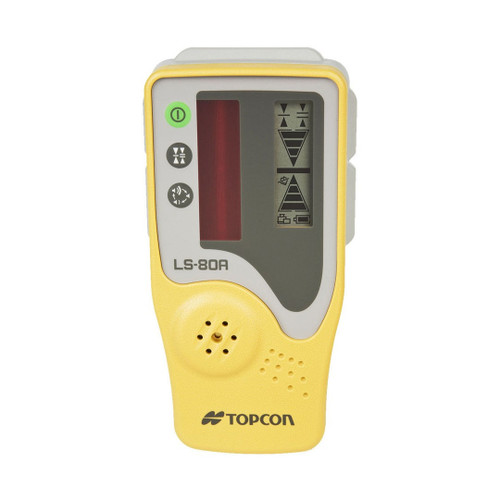
With a working diameter exceeding 2,600 feet and accuracy to ±1/8 inch at 100 feet, this system handles both large-scale earthwork and finish-grade applications. The self-leveling laser head automatically levels and compensates for minor disturbances, while the HL760 receiver provides visual and audible grade indication with millimeter-level detection sensitivity. For contractors managing drainage-critical projects, dual-slope road construction, or precision agricultural grading, the GL422N-17 package delivers the accuracy and versatility that single-slope systems cannot match.
Key Specifications
- Accuracy: ±1/8 inch at 100 feet (±3mm at 30m)
- Working Diameter: 2,600+ feet (800m) with HL760 receiver
- Slope Range: -10% to +10% on both X and Y axes
- Self-Leveling Range: ±5 degrees
- Rotation Speed: 0, 300, 600, 900, 1200 RPM (variable)
- Beam Type: Single-grade and dual-slope rotating red laser
- Power Source: Rechargeable NiMH battery (60+ hours runtime)
- Operating Temperature: -20°F to 122°F (-30°C to 50°C)
- Environmental Rating: IP66 dust and water resistance
- HL760 Receiver: Digital LCD display with on-grade accuracy to 1/16 inch
- Rod Graduations: Tenths (0.01-foot increments) with metric conversion scale
What's in the Kit
- GL422N Dual Grade Rotating Laser Transmitter
- HL760 Digital Laser Receiver with rod clamp
- Tenths-Graduated Leveling Rod (extends to 25 feet)
- Heavy-Duty Laser Tripod with adjustable legs
- RC402N Remote Control for wireless operation
- Rechargeable NiMH Battery Pack
- AC Battery Charger with universal voltage
- Protective Hard-Shell Carrying Case
- Instruction Manual and Quick-Start Guide
- Calibration Certificate with test data
Job Applications
- Drainage and Surface Grading: Dual-slope capability allows you to create compound grades that direct water flow to specific collection points, essential for parking lots, sports fields, and building pads where water must drain in two directions simultaneously. The tenths rod provides the precision needed to achieve the subtle slopes (often 1-2%) required for effective drainage without creating uneven surfaces.
- Agricultural Land Leveling: Precision agriculture demands exact elevation control to optimize irrigation efficiency and prevent water pooling. The GL422N's dual-slope function creates crowned fields or multi-directional drainage planes, while the decimal rod graduations integrate seamlessly with GPS elevation data and laser-guided scraper systems that operate in tenths-of-a-foot increments.
- Road and Highway Construction: Establishing proper cross-slope (crown) while maintaining longitudinal grade requires true dual-axis control. This system allows road crews to set both the centerline grade and the lateral slope simultaneously, ensuring water sheds properly to edges while maintaining the design profile—critical for preventing pavement deterioration and hydroplaning hazards.
- Foundation and Concrete Work: Building foundations often require elevation points that follow sloping terrain while maintaining level building planes. The tenths rod provides the resolution needed for precise formwork elevation, while the dual-grade capability helps establish benchmarks across irregular sites without constantly repositioning the laser or performing complex offset calculations.
- Utility Trenching and Pipeline Grading: Sewer lines, stormwater pipes, and irrigation systems require consistent slope for gravity flow. The GL422N maintains grade reference over extended distances, while the HL760 receiver mounted on excavator masts or grade rods provides real-time depth verification. The tenths graduations allow crews to match engineer-specified slopes given in decimal format (0.005 ft/ft) without conversion errors.
- Site Development and Mass Grading: Large earthwork projects benefit from the extended 2,600-foot working diameter and the ability to establish complex grade planes without multiple laser setups. Dual-slope capability reduces the need for traditional string-line grade stakes, accelerating site preparation while improving accuracy and reducing layout labor costs on multi-acre developments.
Compatible Accessories
- HL700 Basic Laser Receiver – economical alternative for budget-conscious applications
- RC601 Long-Range Remote Control – extended wireless range for large sites
- Alkaline Battery Tray – backup power option for extended field use
- Laser Enhancement Glasses – improves beam visibility in bright conditions
- Machine-Mount Receivers – for excavator and dozer grade control integration
- Grade Rods in various lengths – eighth-graduated and metric options available
- Elevator Tripod – quick-adjust height mechanism for frequent repositioning
- Magnetic Mount Accessories – for steel structure and form alignment
Related Guides
- Complete Rotating Laser Buyer's Guide
- Dual-Slope vs. Single-Slope Laser Comparison
- How to Choose the Right Laser Receiver
- Tenths vs. Eighth-Graduated Rod Selection Guide
FAQ
- What's the advantage of dual-slope capability over single-slope lasers?
- Dual-slope lasers can simultaneously project grade on both the X and Y axes, allowing you to create compound slopes for drainage, crowned roads, or multi-directional grading without repositioning the laser or performing complex calculations. Single-slope lasers only grade in one direction, requiring multiple setups or manual offset measurements for applications needing water flow in two directions.
- Why choose a tenths-graduated rod instead of standard eighth-inch graduations?
- Tenths rods (decimal-foot graduations) provide direct compatibility with digital site plans, GPS coordinates, and civil engineering drawings that specify elevations in decimal format. They eliminate conversion errors between fractional and decimal measurements and provide finer resolution (0.01 ft vs. 0.0104 ft for 1/8-inch marks), which is important for shallow drainage slopes and precision grading specifications.
- What's the maximum slope I can set with the GL422N?
- The GL422N provides -10% to +10% slope range on both axes independently, covering virtually all construction grading requirements. This translates to approximately 1.2 inches of rise or fall per foot of horizontal distance. Steeper slopes typically require string-line or other methods, though such extreme grades are uncommon in construction applications.
- Can this system be used for interior floor leveling and concrete placement?
- Yes, the GL422N excels at interior applications including concrete slab elevation, suspended ceiling installation, and floor flatness verification. The HL760 receiver works in all lighting conditions, and the laser's self-leveling function maintains reference even if the tripod experiences minor disturbance from foot traffic or equipment vibration common on active job sites.