
Best Rotary Laser for Commercial Concrete Slab Work
Quick Answer
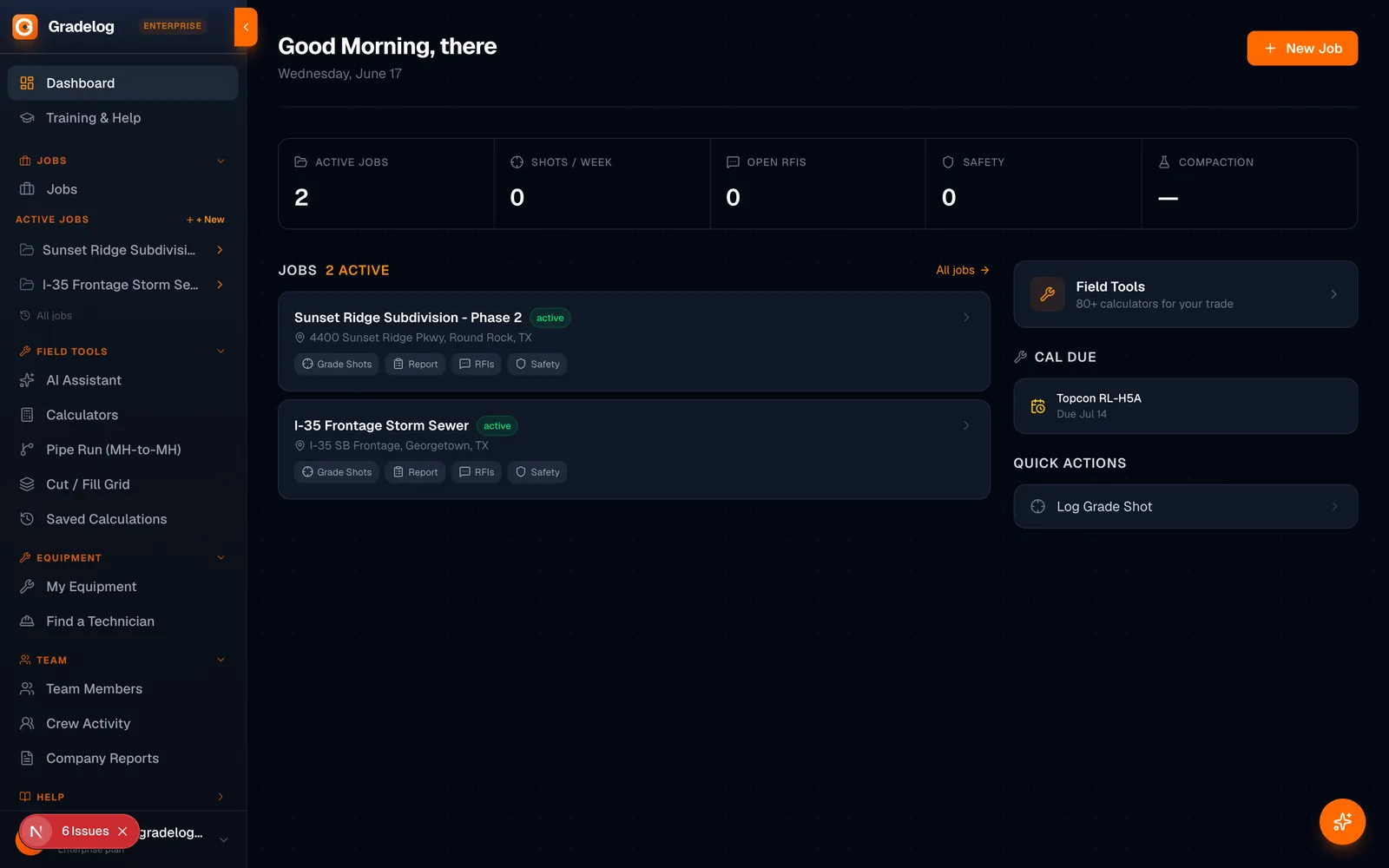
Before selecting between these instruments, use Gradelog's free field calculators to verify your project requirements — grade percentage, cut and fill, elevation, slope, and more. No account required.
After twenty years pouring commercial slabs, I can tell you a quality rotary laser is non-negotiable. The difference between eyeballing grades and having precise laser reference points means the difference between callbacks and getting paid. I've tested these lasers on everything from 50,000 square foot warehouse floors to multi-level parking decks, and these are the units that actually hold up to the abuse we dish out on concrete jobs.
The right rotary laser saves you money on every pour. You'll reduce concrete waste, minimize grinding and patching, and your crew moves faster when they trust their grade reference. Here's what actually works for commercial slab contractors who need reliability, not gimmicks.
Top Picks for Commercial Concrete Work
How to Choose a Rotary Laser for Slab Work
Accuracy Requirements
Commercial flatness specs don't leave room for error. FF/FL numbers matter when you're pouring warehouse floors that'll see forklifts and racking systems. I won't run anything less accurate than ±1/16 inch at 100 feet on commercial jobs. That Dewalt unit works fine for smaller pours, but when you're bidding work with strict tolerances, the Leica or Topcon units give you the precision you need to hit FF50/FL35 or better without excessive grinding.
Working Range and Beam Visibility
Most commercial slabs I pour fall in the 10,000-30,000 square foot range. A 2,000-2,500 foot diameter range handles these jobs without repositioning mid-pour. The Leica Rugby 640 with its 3,300 foot range is overkill for typical work, but if you're doing airport aprons or massive distribution centers, that extra range means fewer setups and faster pours. Remember, you're using a receiver anyway, so beam brightness matters less than range and accuracy.
Durability and Jobsite Protection
Concrete pours are chaotic. Wheelbarrows, vibrators, finishing equipment—there's always something that can knock your laser. The Hilti PR 30-HVS takes abuse better than anything I've used, with its rubberized housing and drop protection. Topcon's RL-H5A also stands up to the punishment. I've seen cheaper lasers knocked out of calibration from a single bump. That IP rating isn't marketing fluff—IP66 or IP67 protection keeps cement dust and water spray from killing your $2,000 investment.
Self-Leveling vs. Manual
Self-leveling isn't optional for commercial work in my book. Manual leveling slows setup and introduces error. Every laser on my recommended list self-levels, and most will alert you if they get knocked beyond their leveling range during the pour. That feature alone has saved jobs when someone bumped the tripod while we had 200 yards of concrete on the ground.
Battery Life and Power Options
Long pours mean your laser runs all day. The Topcon RL-H5A's 100+ hour battery life means I'm not swapping batteries mid-pour or keeping spares charged. Models with both rechargeable and alkaline battery options give you backup when you forget to charge overnight. Nothing worse than your laser dying halfway through a pour because you didn't plan for power.
Receiver Quality
Your rotary laser is only as good as your receiver. I run Topcon lasers with their LS-100D receivers because the detection range and accuracy match. Mixing cheap receivers with premium lasers defeats the purpose. Look for receivers with multiple detection modes, clear displays readable in any light, and mounting options for grade rods and machine control.
What I Actually Use
My crew runs two Topcon RL-H5A units. They've been through hundreds of pours over five years with zero calibration issues. The accuracy is spot-on, battery life gets us through the longest days, and they've survived drops and concrete splatter that would kill lesser lasers. At around $2,200 with a receiver, they're not cheap, but I've made that back dozens of times over in reduced waste and no callbacks for out-of-spec slabs.
For contractors just getting into commercial work or running tighter budgets, the Spectra LL500 delivers solid performance at half the price. You sacrifice some range and refinement, but the core accuracy is there for most commercial applications.
Frequently Asked Questions
What accuracy do I need for commercial slab pours?
For commercial concrete work, you want ±1/16 inch accuracy at 100 feet minimum. Most jobs I run need that level of precision to meet flatness specs. Higher-end models offering ±1/32 inch give you more margin when inspectors show up with their own equipment.
How much working range do I realistically need?
I've found 2,000-2,500 feet diameter covers 95% of commercial pours. Warehouse slabs and parking structures rarely need more. If you're regularly doing larger pours, look at models with 3,000+ foot range, but expect to pay significantly more.
Are self-leveling rotary lasers worth the extra cost?
Absolutely. Manual leveling eats up 10-15 minutes every setup and you're never quite as accurate. Self-leveling units pay for themselves in saved labor within months on commercial jobs. The auto-leveling also protects accuracy if the tripod gets bumped during the pour.
Can I use a rotary laser in bright sunlight?
The laser beam itself is tough to see in direct sun, which is why you need a laser receiver/detector. The receiver picks up the beam even in full sunlight and gives you visual and audio signals when you're on grade. Budget for a quality receiver—it makes all the difference on exterior pours.
Bottom Line for Concrete Contractors
You're pouring concrete to make money, not to deal with equipment headaches. The Topcon RL-H5A hits the sweet spot for most commercial slab contractors—proven reliability, accuracy that meets specs, and durability that justifies the investment. If you're running high-tolerance work or massive pours regularly, step up to the Leica Rugby 640. Tighter budget? The Spectra LL500 gets you in the game without sacrificing the accuracy you need.
Whatever you choose, buy once and buy right. A quality rotary laser outlasts cheap alternatives by years and pays for itself in reduced waste, faster pours, and slabs that pass inspection the first time. That's money in your pocket on every job.
Our Verdict
Calculate Your Grade Before You Buy Before selecting between these instruments, use Gradelog's free field calculators to verify your project requirements — grade percentage, cut and fill, elevation, slope, and more. No account required. Use Free Calculators at Gradelog →
For the full breakdown, see the sections above covering specifications, pros and cons, and use case recommendations for each option.