
Tools Needed for Underground Utilities: A Contractor's Complete Guide
Quick Answer
Underground utility installation demands precision, safety, and reliability. Whether you're laying fiber optic cables, water mains, gas lines, or electrical conduits, the right tools make the difference between a project completed on schedule and one that faces costly delays or r
Underground utility installation demands precision, safety, and reliability. Whether you're laying fiber optic cables, water mains, gas lines, or electrical conduits, the right tools make the difference between a project completed on schedule and one that faces costly delays or rework. This guide covers the essential and optional tools professional contractors need for successful underground utility projects.
Essential Tools for Underground Utility Work
Underground utility installation requires specialized equipment that goes far beyond standard hand tools. The following are non-negotiable for professional-grade work:
Rotary Laser Level (Topcon RL-H5A – $608)
The Topcon RL-H5A is the workhorse of underground utility contractors. This laser level provides 360-degree coverage with 100-meter range, making it ideal for establishing grade lines across excavation sites. Here's why this tool is essential for underground utilities:
- Accuracy: Maintains ±1/8" accuracy over 100 feet, critical for maintaining proper slope on utility lines
- Durability: IP66 rating withstands mud, dust, and water exposure common in utility trenches
- Speed: Setup takes minutes, allowing crews to quickly establish reference planes across large areas
- Versatility: Works for both gravity-fed utilities (water, sewer) and precision installations (fiber optic)
For underground utilities, maintaining consistent grade is paramount. A slope error of just 1% can cause water pooling in sewer lines or create dead zones in conduit systems. The RL-H5A eliminates guesswork and ensures every section of pipe sits at the correct elevation.
Pipe Laser (Spectra DG813 – $5,196)
The Spectra DG813 laser is specifically engineered for underground pipe and conduit installation. This is the premium choice for contractors installing utilities that demand precision alignment:
- Pipe-Specific Design: Sits inside the pipe itself, establishing a perfectly aligned laser beam down the entire run
- Range: Works effectively up to 1,600 feet in ideal conditions, perfect for long-distance utility corridors
- Grade Capability: Accommodates slopes from -15% to +15%, handling challenging terrain
- Real-Time Feedback: Laser dot on target board shows exactly where pipes need adjustment
Pipe lasers are essential when installing utilities where slope tolerance is strict. Water distribution systems need proper grade to prevent air locks and sediment accumulation. The DG813's ability to work inside the actual pipe ensures alignment that surveyors can verify and that prevents future maintenance issues.
GNSS/GPS System (Spectra GL412N – $2,595)
The Spectra GL412N provides centimeter-level accuracy for underground utility mapping and layout. This tool serves multiple critical functions:
- Existing Utility Locating: Helps identify marked utilities before excavation begins
- As-Built Documentation: Records exact position of installed utilities for future reference
- Tie-In Points: Establishes connection points between new utilities and existing infrastructure
- Compliance: Provides documentation needed for permits and inspections
Underground utilities require accurate mapping for safety and regulatory compliance. The GL412N's accuracy eliminates conflicts with existing utilities and provides legal documentation of installation locations. This investment pays dividends when utilities need future maintenance or modification.
Additional Essential Tools
- Laser Receiver: Handheld detector that picks up laser signals from rotary and pipe lasers in daylight
- Measuring Tape (100-300 feet): For verifying distances and grade calculations
- Grade Stakes: Wooden or composite markers to establish reference points along utility routes
- Safety Equipment: High-visibility vests, hard hats, and traffic control equipment (non-negotiable for roadside utilities)
- Leveling Rod: Used with laser levels for precise elevation readings
Optional Tools That Improve Efficiency
While not absolutely required, these tools significantly improve workflow and reduce timeline:
- Digital Level: Provides electronic readouts that reduce operator error and fatigue
- Laser Range Finder: Quick measurement tool for estimating distances and slopes
- Tablet-Based Laser Control: Some modern systems allow remote laser management, reducing staff needs
- Drone with Survey Software: For pre-project site analysis and as-built documentation on large projects
- Pipe Locator (Active Trace System): Locates existing metallic utilities without relying solely on painted marks
Common Mistakes When You Don't Have the Right Tools
Contractors who skip investments in proper laser and positioning equipment face predictable problems:
- Grade Errors: Utilities installed without proper slope develop sediment buildup, freezing issues, or inadequate flow. Rework costs exceed tool investment by 10x.
- Misalignment: Pipes that don't align cause joint leaks, reduce flow capacity, and create pressure issues. Even 1/4" misalignment compounds over long runs.
- Utility Conflicts: Without proper mapping, excavation can strike existing utilities, causing expensive damage, service disruptions, and safety hazards.
- Inspection Failures: Municipal inspectors require documentation of grade and alignment. Lack of laser documentation means failed inspections and project delays.
- Timeline Overruns: Manual methods like string lines and hand measurements are 3-4x slower than laser-guided installation.
Frequently Asked Questions
How deep should underground utilities be installed?
Depth varies by utility type and location. Gas lines typically require 24" minimum, water mains 36-48", and electrical conduits 18-24" under roads. The laser level helps establish consistent grade from the surface down, while the pipe laser ensures the installed pipe achieves the required depth and slope throughout the run.
Can I use a standard rotary laser instead of a pipe laser?
In a pinch, yes—but with limitations. Rotary lasers are excellent for establishing overall grade lines across excavations. However, pipe lasers are superior once pipes are in the trench because they align inside the pipe itself, ensuring the actual utility follows the intended path. Many contractors use both: RL-H5A for trench preparation and DG813 for final pipe alignment.
What accuracy level is required for utility installation?
Most municipal codes require ±1/8" vertical accuracy and ±1/4" horizontal alignment over 100 feet. Professional-grade laser systems meet or exceed these standards. Budget hand methods typically achieve only ±1" or worse, often triggering re-inspection.
How often should laser levels be calibrated?
Manufacturers recommend calibration annually or after any impacts/drops. Most express tool rental services include calibration verification with rental equipment. For contractor-owned systems, budget $75-150 annually for professional calibration.
Ready to upgrade your utility installation toolkit? Explore our complete selection of rotary lasers, pipe lasers, and GNSS systems at Express Tools. Browse Rotary Lasers | View Pipe Laser Systems | Shop GNSS/GPS Equipment
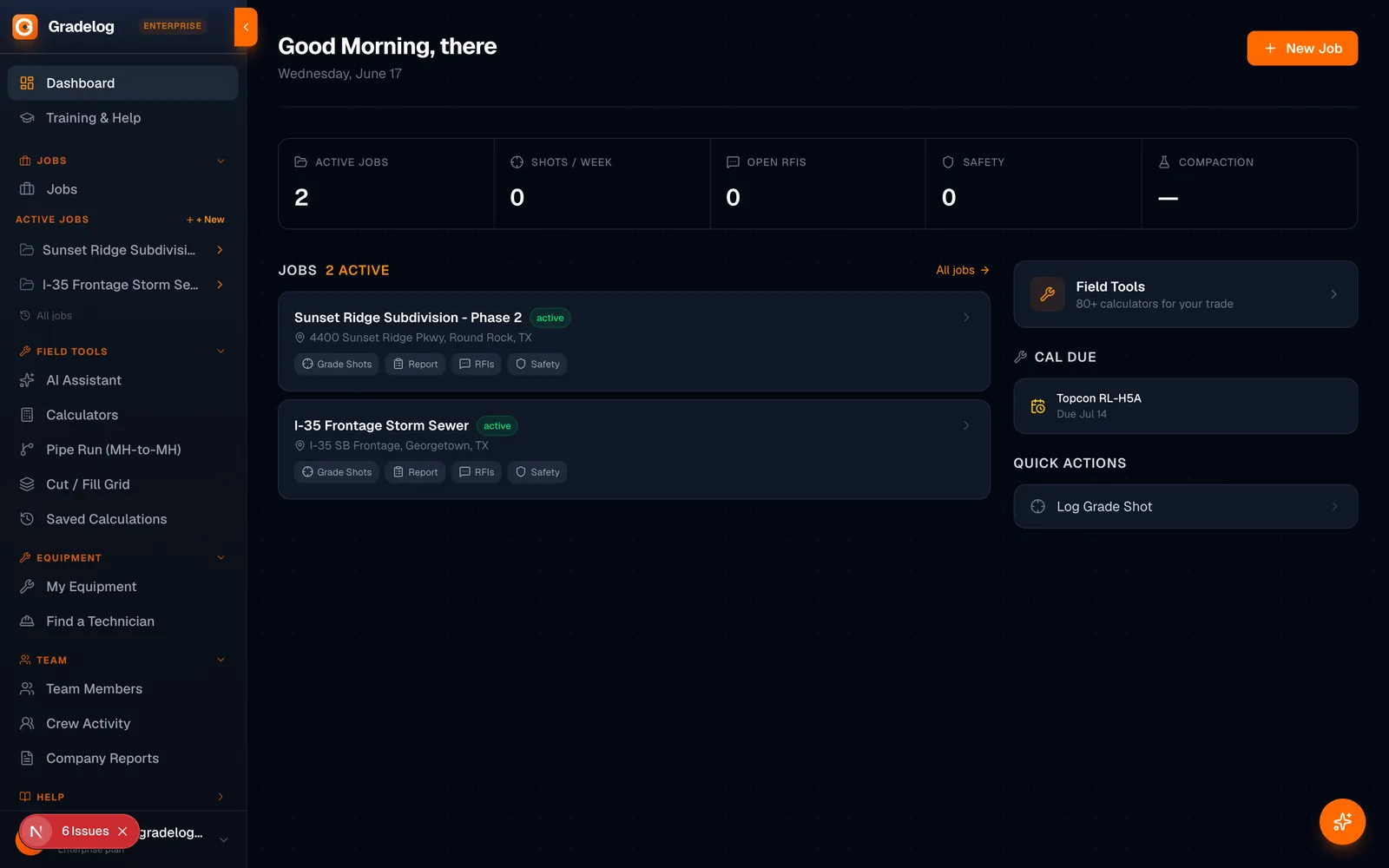
Document this job type with Gradelog — shot logs, as-built reports, calibration records. Free to start at gradelog.com.