Free Shipping on orders over $500

Survey Tripods
The Short Answer
A survey tripod supports your laser, optical level, or total station on a stable, adjustable platform. The right tripod depends on the instrument: flat-head tripods for lasers and levels, dome-head for total stations and theodolites, and elevating tripods when the instrument must be raised above obstructions. Express Tools stocks aluminum, fiberglass, and heavy-duty elevating tripods from Nedo, SitePro, and other pro brands.
The tripod is the most underrated accuracy component in the kit: a flimsy tripod moves in wind and traffic vibration, and every bit of that movement becomes grade error. Instrument class matters — a robotic total station needs a rigid, dome-head wood or fiberglass tripod, while a rotary laser is happy on a solid flat-head aluminum model.
Elevating (crank-up) tripods raise the instrument head as much as 10+ feet for working over parked equipment, formwork, or crowds — standard kit for laser screed and machine-control setups.
Survey Tripods In Stock
Inventory is being restocked — contact us for availability and lead times.
Frequently Asked Questions
Flat head or dome head — which tripod do I need?
Match the instrument base: rotary lasers and most optical levels mount on a flat-head tripod with a 5/8-11 stud. Total stations and theodolites use a dome (curved) head so the instrument can be shifted and precisely centered over a point. Buying the wrong head is the most common tripod mistake.
Aluminum vs fiberglass vs wood tripods?
Aluminum is light and affordable — fine for lasers and levels. Fiberglass and wood damp vibration better and are dimensionally stable across temperature swings, which matters for total stations and long-occupation setups. Heavier is generally steadier.
What is an elevating tripod for?
An elevating tripod has a crank column that raises the instrument head — often to 10 feet or more — so a rotary laser can shoot over obstructions like formwork, spoil piles, or equipment. They are standard on laser screed crews and large concrete pours.
Will any tripod fit my laser or total station?
Almost all professional instruments use the 5/8-11 thread standard, so thread fit is rarely the issue — head shape (flat vs dome), load rating, and stability are what to match. Check the instrument weight against the tripod’s rated capacity, especially for robotic total stations.
Related Resources

Built for equipment owners
Run the jobsite around your equipment
Gradelog is the AI field platform for contractors — grade shots, photo documentation, calibration tracking, and as-built reports, all tied to your gear.
- Equipment & calibration tracking
- Photo + grade documentation
- AI field assistant, 8 languages
Free 14 days with every Express Tools purchase
Your equipment. Your data. All in one place.
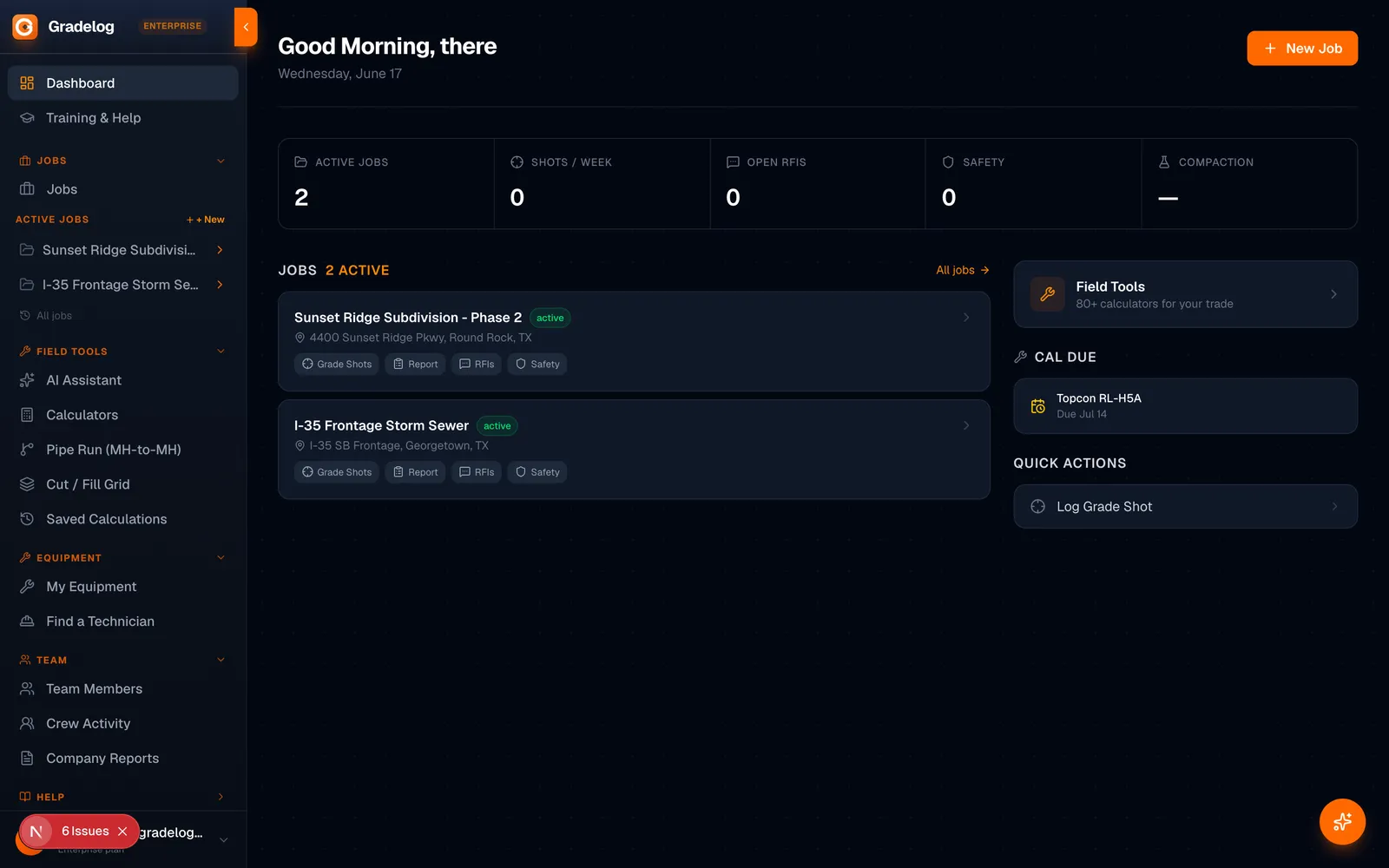
Gradelog is the field-execution platform built for grading and earthwork crews. Log grade shots, track cut/fill, document phases with photos, and generate as-built reports — from the cab to the office.
- Grade shots & cut/fill tracking per job
- Photo documentation by phase, task, and equipment
- As-built reports ready for inspector sign-off
- AI field assistant — troubleshoot on the jobsite
Built by the same team as Express Tools
Try Free →14 days
Free trial
8 languages
Supported
iPhone + Android
Works on