
Contractor Equipment in Seattle, WA
Quick Answer
Seattle is one of the most active construction markets in the United States, driven by Amazon's continued urban campus expansion, Microsoft's massive Redmond modernization, Sound Transit's multi-billion dollar light rail extension program, and a population that hasn't stopped gro
Seattle is one of the most active construction markets in the United States, driven by Amazon's continued urban campus expansion, Microsoft's massive Redmond modernization, Sound Transit's multi-billion dollar light rail extension program, and a population that hasn't stopped growing since the tech boom began. The greater Puget Sound region — encompassing Seattle, Bellevue, Redmond, Kirkland, Renton, Tacoma, Everett, and Lynnwood — is investing in transit, housing, and commercial infrastructure at a pace that keeps the contractor workforce fully engaged.
Express Tools delivers professional contractor equipment to Seattle and the full Puget Sound metro with next-day ground service to King, Pierce, Snohomish, and Kitsap counties. Rain doesn't stop Seattle construction — and it won't stop your supply chain.
Tools for Seattle's Construction Environment
Seattle construction is defined by its rain, its complex geology, its seismic exposure, and the sophisticated demands of tech-industry clients who set high standards for every aspect of construction quality.
Year-Round Rain — Not a Deterrent, a Planning Factor: Seattle averages rain on 150+ days annually. The wet season runs October through May. Professional Seattle contractors don't pause for rain — they plan for it. Temporary roofing gets deployed early to enable interior work. IP65-rated tools survive outdoor exposure far better than standard ratings. Wet-location GFCIs and weatherproof cords are basic site safety. Mud management — crushed rock at site entrances, geotextile underlayer, mud mats — is standard practice for any winter job site. The contractors who treat rain as manageable outperform those who treat it as an excuse.
Complex Geology and Seismic Risk: Seattle sits in one of the highest seismic hazard zones in the continental US. The Cascadia Subduction Zone (offshore) and the Seattle Fault (running east-west through the city) both pose significant risks. Additionally, Seattle's geology is highly variable — glacial till in higher elevations, fill and marine sediment in low-lying areas and along the waterfront, liquefiable soils near Puget Sound. Geotechnical investigation before significant excavation is not optional. Building to Washington's seismic standards (IBC with WA amendments) is strictly enforced in Seattle.
Tech-Sector Client Standards: Building for Amazon, Microsoft, or their contractors means meeting high tolerances, documentation requirements, and quality control standards. Tools need to perform consistently. Level and plumb tolerances are tight. And the pace of tech campus construction — sometimes with compressed schedules and 24/7 operations — demands tool reliability and fast parts support.
Top Products for Seattle Contractors
- IP65-Rated Cordless Tool Platform: Seattle's outdoor conditions demand weather-rated tools. Choose platforms with IP65-rated batteries and chargers for year-round outdoor exposure. Several major brands now offer weather-sealed tool series specifically designed for wet-climate contractors — worth the premium in Seattle's market.
- Wet-Location GFCI Protection System: Seattle job sites require GFCI protection on all 120V circuits in wet conditions — which is essentially year-round in the outdoor environment. Invest in quality portable GFCI units, weatherproof extension cords rated for outdoor wet use, and covered distribution boxes. Electrical safety in Seattle's wet conditions is non-negotiable.
- High-Precision Interior Laser Level: Amazon and Microsoft's high-bay warehouse and tech campus interiors demand floor flatness (FF) and floor levelness (FL) tolerances that consumer-grade lasers can't achieve. Professional-grade self-leveling rotary or line lasers with ±0.5mm/10m accuracy meet commercial interior spec requirements.
- Mud Mat System (Heavy-Duty Construction Mats): Site entry erosion control and mud management is legally required and operationally critical in Seattle's wet conditions. Heavy-duty interlocking construction mats or a robust crushed rock and geotextile entrance pad protects the site and keeps the city's sediment rules satisfied.
- Seismic Anchor Installation System: Seattle's commercial projects require seismic-rated anchor installations for virtually all structural connections. Hilti, Simpson, and similar systems with ESR documentation and seismic-specific testing data are required for code-compliant installations in Seattle's high-seismic environment.
Fast Shipping to Seattle
Express Tools ships to the full Puget Sound region — Seattle, Bellevue, Redmond, Kirkland, Renton, Bothell, Kenmore, Lynnwood, Everett, Tacoma, Federal Way, Auburn, and Kent — with next-day ground service to most King, Pierce, and Snohomish County zip codes. Orders placed by 3 PM PST ship same day. Kitsap Peninsula (Bremerton, Silverdale, Port Orchard) receives 2-day ground service. Same-day or AM delivery available via will-call or courier for urgent job site needs in the Seattle metro.
Local Resources for Seattle Contractors
- Washington State Department of Labor & Industries (L&I) — Contractor Registration: Required registration for all Washington contractors performing work over $500. Trade licenses for electrical, plumbing, and specialty contractors also through L&I. lni.wa.gov/licensing-permits/contractors
- Seattle Department of Construction & Inspections (SDCI): Building permits, plan review, inspections, and contractor information for Seattle city limits. seattle.gov/sdci
- Master Builders Association of King and Snohomish Counties: Local HBA with market data, code updates, and networking for residential contractors in the greater Seattle area. mba-ks.com
- AGC of Washington: Commercial and civil contractor resources for Washington State. agcwa.com
- Sound Transit: For contractors pursuing Sound Transit light rail construction contracts and subcontracting opportunities. soundtransit.org/business-opportunities
Frequently Asked Questions — Seattle
- How do Seattle contractors manage construction in 150+ days of rain per year?
- Professional Seattle contractors build rain into every schedule and budget. Deploy tarps and temporary roofing early for interior work during envelope delays. Use IP65-rated tools for outdoor exposure. Use wet-location GFCIs. Plan mud management with crushed rock and geotextile. Schedule concrete pours around weather windows. Seattle's rain is consistent but manageable — preparation is the differentiator.
- What major construction projects are active in Seattle?
- Amazon's South Lake Union and Denny Triangle campus expansion continues with multi-tower development. Microsoft's Redmond campus modernization is multi-year, multi-billion. Sound Transit's Link Light Rail extensions (East Link, Lynnwood, Federal Way) are among the largest transit builds in the US. Bellevue, Kirkland, Renton, and Everett are all experiencing significant commercial and residential growth.
- What are Seattle's soil conditions?
- Seattle's geology is highly variable — glacial till in higher elevations, fill and marine sediment near the waterfront and in SoDo/Georgetown, liquefiable soils near Puget Sound. The Seattle Fault runs east-west through the city. Geotechnical investigation before significant excavation is essential — conditions can vary dramatically within a few blocks.
- What contractor licensing is required in Washington State?
- Washington requires contractor registration with the Dept. of Labor & Industries (L&I) for work over $500. Trade-specific licenses (electrical, plumbing, HVAC) are additional requirements through L&I. Seattle also requires a City Business License. Apply and look up registrations at lni.wa.gov.
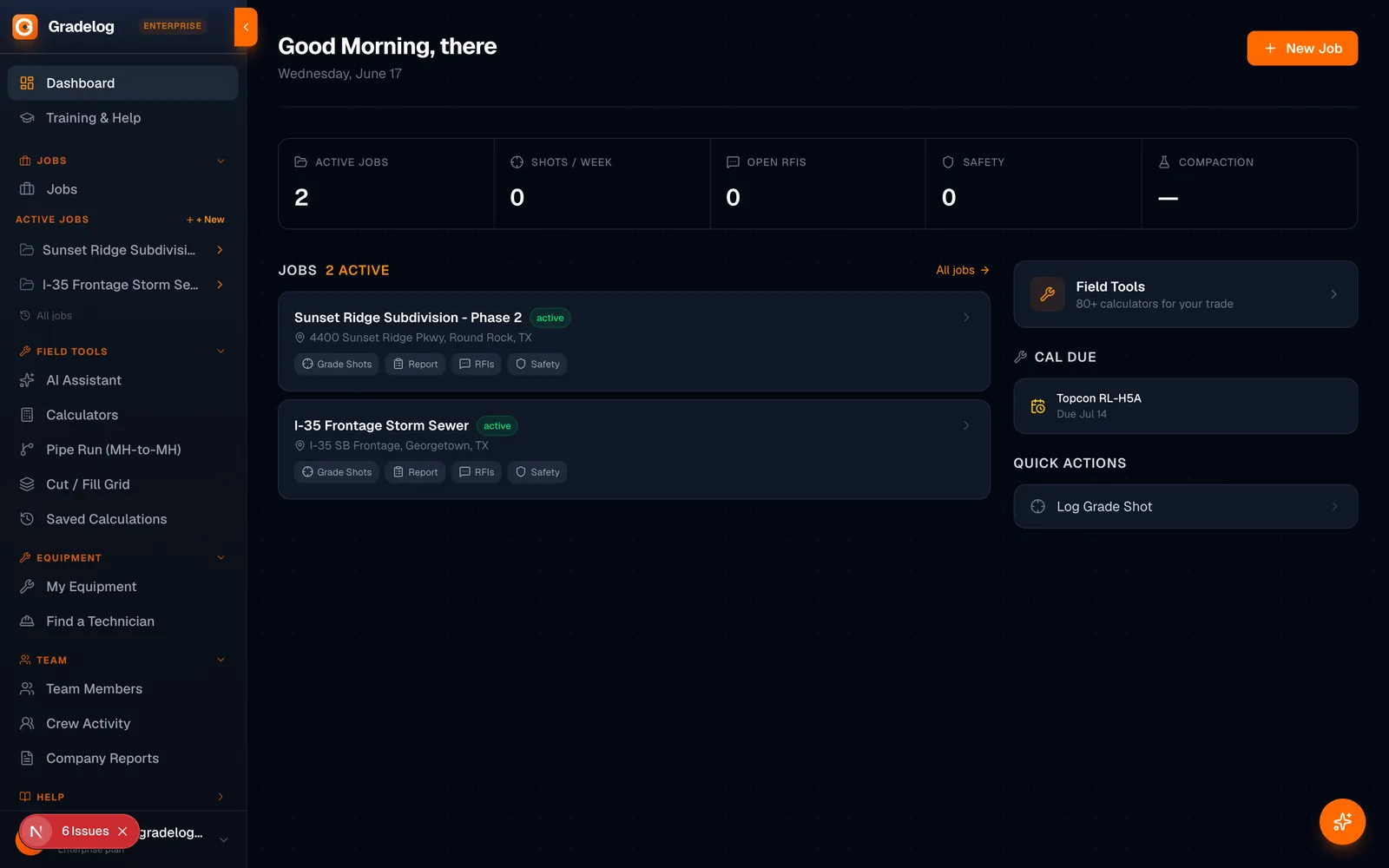
Contractors in your area use Gradelog to document jobs, track equipment, and generate daily reports. Free to start.